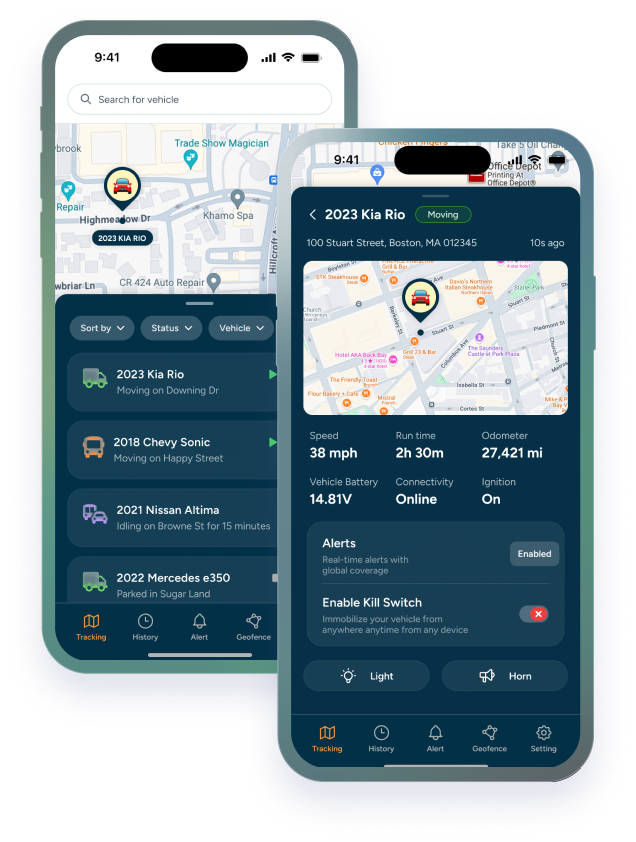

Truck leasing companies compete on rate, terms, and fleet availability; until two lessors quote nearly the same deal, and something else has to break the tie. Increasingly, that something is visibility. Leasing companies running GPS fleet management software can answer questions about a vehicle's location, condition, and usage in real time, while competitors are still calling drivers or waiting on paperwork. For lessees evaluating who to sign with, that difference shows up fast; and it's reshaping how the best GPS fleet management software gets positioned in a sales conversation, not just an operations one.
What Lessees Actually Want From a Leasing Company
Lessees aren't just buying access to a truck. They're buying confidence that the leasing company runs a tight operation; one where billing is accurate, support is responsive, and problems get caught before they become disputes. GPS tracking for truck leasing companies feeds all three. Mileage and usage data support clean billing. Real-time location data means a support call doesn't start with 'let me find out where that truck is.' And when something does go wrong; a missed maintenance window, an unexpected route deviation — GPS software for leasing companies turns a vague complaint into a documented conversation with an actual answer attached.
None of this needs to be pitched as 'we have GPS trackers.' It's pitched as 'we know what's happening with our assets, so you're never left guessing.' That's the version lessees are actually listening for.
How Visibility Becomes a Selling Point, Not Just an Operational Tool
Most leasing companies still talk about fleet tracking internally — a back-office tool for recovery and maintenance. But truck leasing GPS tracking benefits don't stop at operations. They belong in the sales conversation, because visibility is exactly what a lessee is trying to buy alongside the truck itself: proof that the company on the other side of the contract is paying attention.
When a leasing company can say, with a straight face, that every unit in the fleet is tracked and accounted for, that's fleet tracking as a leasing differentiator — not a footnote in the operations manual. It signals a level of professionalism that lessees notice, especially the ones who've been burned before by a lessor who couldn't answer basic questions about where an asset had been.
The True Cost of One Stolen or Damaged Asset Without Proof
A missing or damaged truck is expensive on its own. It gets more expensive — and a lot more contentious — when there's no record to settle the disagreement about what happened, when, or whose fault it was. Without GPS tracking for truck leasing companies, a dispute over damage or a missing asset often comes down to two conflicting accounts and no way to verify either one.
This is the scenario where GPS fleet management software earns its keep quietly. Route history and location logs don't just help recover a stolen vehicle faster — they remove the ambiguity that turns a bad situation into a legal one. Total-cost-of-ownership analyses in the leasing industry consistently point to unrecovered or undocumented losses as one of the more avoidable line items on a lessor's books, and the fix is rarely complicated: have the record before you need it, not after.
How GPS Data Supports Faster, Cleaner Lease-End Settlements
Lease-end conversations are where a lot of leasing relationships get tested. Mileage disputes, questions about where the vehicle actually operated, disagreements over wear versus misuse — all of it slows down settlement and, often, damages the relationship right when a renewal or referral would have been on the table.
Fleet tracking for lease-end settlements takes most of the guesswork out of that conversation. Route history and usage records give both sides the same set of facts to work from, which means less back-and-forth and fewer settlements that end in a dispute instead of a signature on the next contract. For a leasing company, that's not a minor operational win — it's the difference between a lessee who renews and one who shops around next time.
Using Fleet Tracking as a Competitive Differentiator
Sales teams at leasing companies are often selling against nearly identical rate sheets. What they're rarely selling against is operational trust — and that's where fleet tracking as a leasing differentiator does real work. A sales rep who can say 'every truck we lease is tracked, and here's what that means for you if something ever goes sideways' is offering something a competitor without that system can't match on the spot.
This is also where the leasing company's own internal use of GPS data becomes a talking point instead of a back-office detail. Truck leasing GPS tracking benefits aren't just about protecting the asset for the lessor's sake — they're a concrete reason for a lessee to choose one leasing company over another when the rest of the deal looks the same.
Choosing the Right GPS Strategy for Your Leasing Portfolio
Not every GPS fleet management software option is built with leasing companies in mind. Some are designed around long-haul carriers managing their own trucks; others are built for rental fleets with high turnover and short-term usage windows. Leasing companies sit in between — they need long-term visibility across a portfolio of assets that are, legally and financially, still theirs, even while someone else is driving them.
|
Fleet Type |
What They Need From GPS Software |
Where Leasing Companies Differ |
|---|---|---|
|
Long-haul carriers |
Real-time route optimization, fuel and driver behavior |
Owns the truck long-term — leasing dynamics don't apply |
|
Rental fleets |
Short-term usage tracking, fast turnover reporting |
Optimized for days or weeks, not multi-year terms |
|
Truck leasing companies |
Long-term visibility, lease-end reporting, dispute documentation |
Asset is leased out but still legally and financially theirs |
When evaluating fleet management software companies, the questions worth asking are less about feature checklists and more about fit: Does the system support the kind of route history and usage reporting that makes lease-end settlements easier? Can it scale across a growing portfolio without adding operational overhead? Does it give sales teams something concrete to point to when they're trying to close a deal on trust as much as price? The best GPS fleet management software for a leasing company is the one that answers yes to all three — because for a lessor, GPS tracking isn't just about knowing where the trucks are. It's about closing more deals and protecting the assets you're still responsible for long after the ink is dry.