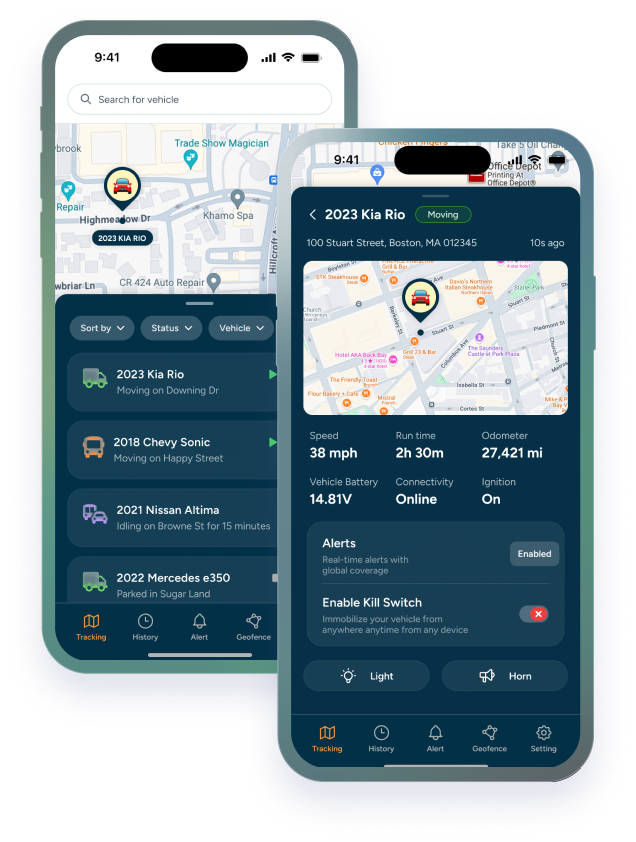

Not long ago, real-time GPS tracking felt revolutionary. Fleet managers could finally see where vehicles were, review trip history, and respond faster to issues in the field. But real-time visibility stopped being “enough” well before 2026. Over the past several years, as fleets became more complex and expectations increased, location-only tracking shifted from a competitive advantage to a baseline requirement. In 2026, that reality is simply impossible to ignore.
Today’s fleets operate in an environment defined by higher operating costs, tighter margins, and increased accountability. While real-time tracking is still essential, knowing where a vehicle is at any given moment rarely explains delays, prevents breakdowns, or improves overall efficiency. Fleets need more than visibility, they need understanding.What Real-Time Tracking Actually Solves
Real-time GPS tracking continues to play an important role in fleet management. It provides live vehicle locations, supports route verification, and offers a record of trips and stops. For dispatchers and managers, this visibility creates a shared reference point for what is happening in the field.
The limitation is that real-time tracking is inherently reactive. It shows what is happening now or what already happened, but it does not explain why something occurred or what action should be taken next. Fleet managers are often left reviewing maps and reports, exporting data, or relying on experience and guesswork to interpret what the system is showing them.
As fleet operations grow more complex, this reactive approach becomes increasingly inefficient.
Why Real-Time Tracking Alone Falls Short
Most fleet challenges are not location problems. Unexpected maintenance issues, rising fuel costs, safety risks, and underutilized assets are rarely solved by knowing where a vehicle is on a map. Real-time tracking does not predict downtime, connect driving behavior to wear and tear, or surface patterns that reveal inefficiencies over time.
In many cases, traditional GPS tracking systems generate more information than fleets can realistically act on. Alerts pile up, reports go unread, and valuable data is overlooked because it lacks context. Instead of reducing workload, the system adds another layer of manual effort.
This gap is exactly where many fleets begin to feel that their GPS system isn’t keeping up with their operation.
What Fleets Need Beyond Location Data
The evolution of fleet management has made one thing clear: data alone is not the solution. Fleets need GPS systems that transform tracking data into insight and insight into action.
A smart GPS system builds on real-time tracking by connecting location data with maintenance, driver behavior, and asset performance. Rather than treating each data point as isolated, it looks at how everything works together. This allows fleet managers to spot trends, identify risks early, and make informed decisions without constantly digging through reports.
The goal is no longer to track more, it’s to understand more with less effort.
How Smart GPS Systems Change Fleet Operations
Smart GPS systems are designed to support proactive fleet management. They help fleets stay ahead of maintenance by automating preventive service tracking based on mileage, engine hours, and time, reducing the likelihood of unexpected breakdowns. They provide meaningful driver behavior insights that reveal patterns over time, helping improve safety and reduce operating costs without creating a culture of micromanagement.
These systems also simplify fleet visibility by bringing vehicles, trailers, and equipment into a single platform. Instead of juggling multiple tools and dashboards, fleet managers gain a unified view of their operation. Reporting becomes clearer and more actionable, making it easier to prioritize what needs attention and why.
Most importantly, smart GPS systems are built to reduce friction. By surfacing what matters most, they allow fleet teams to focus on decision-making rather than data management.
When Real-Time Tracking Isn’t Enough Anymore
Many fleets reach a point where basic GPS tracking no longer supports their goals. Managers may find themselves checking maps frequently but still lacking confidence in overall performance. Maintenance issues may feel sudden, even though warning signs existed in the data. Alerts may become background noise rather than useful signals. Information may be spread across multiple systems, making it harder to see the full picture.
These are not signs of poor fleet management. They are signs that the operation has outgrown location-only tracking.
Why This Matters Heading Into 2026
Fleet management continues to evolve, and the pressure to do more with less is only increasing. Driver shortages, rising costs, and higher service expectations leave little room for reactive decision-making. Fleets that rely solely on real-time tracking risk falling behind, not because the technology is outdated, but because it’s incomplete.
Smart GPS systems address this challenge by turning tracking into a strategic advantage. They help fleets prevent problems, operate more efficiently, and scale with confidence in an increasingly demanding environment.
Real-Time Tracking Is the Starting Line
Real-time tracking will always be a foundational part of fleet management, but it is no longer what sets fleets apart. In 2026, it represents the starting line, not the finish.
Fleets that move forward are adopting smart GPS systems that connect data, automate insight, and support proactive decision-making. The difference isn’t just knowing where your fleet is, it’s understanding how your fleet is performing and where improvements can be made before problems arise.