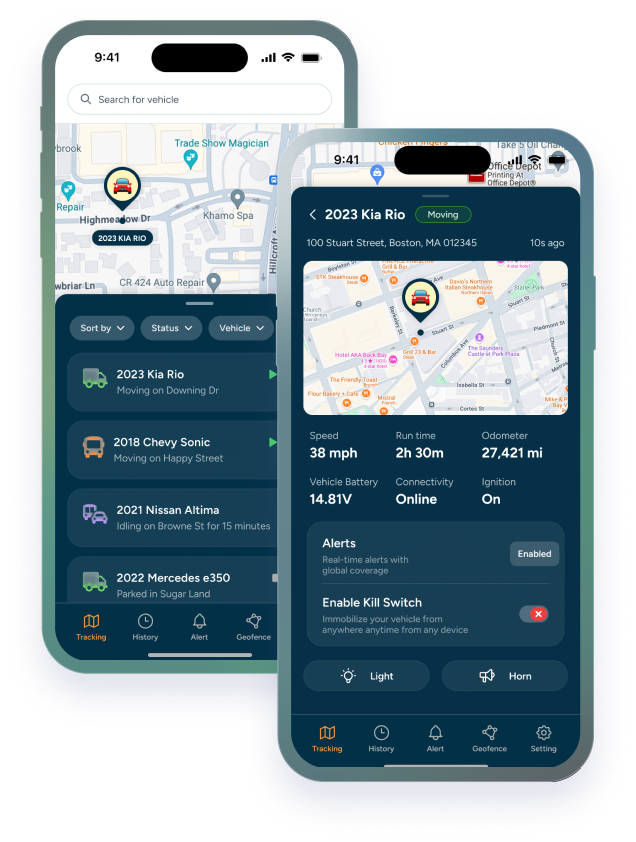

For businesses that rely on vehicles and mobile equipment, visibility is critical. Whether managing delivery vans, service trucks, trailers, or job-site equipment, fleet managers face increasing pressure to improve efficiency, reduce costs, and maintain accountability. GPS tracking technology has become one of the most effective tools for achieving these goals.
Managing a fleet is already a full-time job. Add expensive equipment, trailers, job sites, and multiple operators into the mix, and suddenly it’s easy to lose track of what’s where, who’s using it, and how much it’s costing you.
That’s exactly why more companies are investing in GPS tracking for equipment and fleet vehicles. Whether you manage construction machines, farm equipment, trailers, or heavy-duty assets, GPS tracking helps you protect your investments, reduce downtime, and stay in control of daily operations.
In this guide, we’ll break down the key benefits of GPS tracking of equipment, how it supports fleet performance, and why industries like construction and agriculture are adopting it fast.
Real-Time Visibility Over Your Equipment and Fleet
One of the biggest advantages of GPS tracking of equipment is being able to see exactly where your assets are at any moment. Instead of calling employees, sending someone to search a yard, or relying on memory, you can simply check your dashboard and instantly locate your equipment.
For businesses that operate across multiple job sites, this level of visibility is a game changer. Whether it’s a skid steer, generator, excavator, or service trailer, GPS tracking helps eliminate confusion and saves valuable time every single day. Many companies don’t realize how much money they lose just from crews wasting time looking for the right equipment.
With reliable heavy equipment GPS tracking, your operations stay organized and you always know what’s available and where it’s located.
Stronger Theft Protection and Faster Recovery
Equipment theft is one of the most expensive risks businesses face, especially in construction and agriculture. Heavy equipment, trailers, and machinery are valuable assets that can disappear quickly, sometimes overnight.
By installing heavy equipment GPS tracking devices, you dramatically increase your ability to respond fast if something goes missing. If equipment moves outside working hours or leaves a designated area, you can receive alerts immediately. That means you’re not finding out days later when it’s already too late.
This is especially important when it comes to GPS tracking for equipment trailers, since trailers are often easy targets. They can be hooked up and taken within minutes, and without tracking, recovery becomes extremely difficult. With GPS tracking, you have location data that can help law enforcement recover stolen equipment before it’s stripped or resold.
Better Job Site Efficiency and Less Downtime
In industries like construction, time is everything. A crew can’t work if the equipment isn’t on-site. And if a machine is stuck at another location or missing entirely, the entire job schedule can fall apart.
That’s why construction equipment GPS tracking has become so valuable. It allows managers to confirm equipment arrival, monitor movement between job sites, and reduce delays caused by poor coordination. Instead of assuming a trailer is at the site, you can verify it instantly.
Over time, GPS tracking creates smoother scheduling and eliminates the downtime that comes from miscommunication. The result is a faster workflow, fewer interruptions, and better project timelines.
Smarter Equipment Usage and Operational Planning
Many businesses own more equipment than they actually need—not because they want to overspend, but because they don’t have accurate insight into what’s being used and what’s sitting idle.
With GPS tracking for equipment, you can monitor movement patterns and understand which machines are active daily versus which ones barely move. This helps you make smarter decisions about equipment rotation, purchasing, and rentals. Instead of guessing, you can plan based on real usage.
This is where GPS tracking chips for equipment can make a major difference, especially for smaller tools or portable assets that tend to get misplaced or moved frequently.
When you have visibility, your equipment becomes easier to manage—and much more profitable.
Full Control Over Equipment Trailers
Trailers are often overlooked in fleet management, even though they play a major role in daily operations. They carry tools, transport machinery, and often sit unattended on job sites or storage lots.
Installing GPS tracking for equipment trailers gives you the ability to monitor trailer location at all times, and receive alerts if the trailer moves unexpectedly. This helps prevent theft, but it also helps with day-to-day organization. Many companies lose time simply trying to figure out which trailer is assigned to which crew.
With GPS tracking, you can confirm where the trailer is, how long it’s been there, and whether it has moved without authorization.
Improved Farm Operations With Equipment Tracking
Agricultural businesses face unique challenges because equipment is often spread out across large rural areas. Tractors, harvesters, and attachments may be left in different fields, barns, or remote locations—and finding them can waste hours.
That’s why farm equipment GPS tracking is becoming more common. GPS tracking helps farmers and agricultural managers monitor equipment across multiple properties, reduce wasted time, and improve seasonal efficiency when every minute matters.
It also provides added security in remote areas where theft may go unnoticed for longer periods. With GPS tracking, you can spot unauthorized movement early and respond faster.
Lower Costs and Better ROI Over Time
Many business owners assume GPS tracking is just an extra expense. In reality, it often pays for itself quickly.
When you implement heavy equipment GPS tracking, you reduce losses caused by theft, minimize downtime, and improve how efficiently equipment is being used. You also reduce unnecessary rentals, prevent duplicate purchases, and eliminate wasted fuel and labor caused by poor coordination.
Even small improvements—like saving 20 minutes per day per crew—can add up to thousands of dollars over the course of a year. That’s why GPS tracking isn’t just a security tool. It’s a long-term cost-saving strategy.
Geofencing Alerts That Keep You in Control
One of the most powerful features of modern GPS systems is geofencing. Geofencing allows you to set virtual boundaries around job sites, farms, yards, or storage facilities. If equipment enters or exits that zone, you receive an instant alert.
This feature is especially useful for construction equipment GPS tracking because it helps prevent unauthorized use and alerts you the moment equipment is moved outside the work zone. Instead of finding out later, you can respond immediately.
For businesses managing multiple crews, geofencing adds another layer of control and accountability.
One System to Manage Your Entire Operation
The real power of GPS tracking is that it allows you to manage everything from one platform. Instead of tracking vehicles separately from equipment, and equipment separately from trailers, you can monitor your entire operation in one place.
A strong GPS platform makes GPS tracking for equipment simple and scalable, whether you manage five machines or hundreds. When fleet vehicles, equipment, and trailers are tracked together, your dispatching improves, your team stays organized, and your business becomes easier to run.
Final Thoughts: Why GPS Tracking Is a Must for Equipment Management
Whether you operate in construction, agriculture, logistics, or contracting, GPS tracking gives you the visibility and control needed to protect your assets and run operations efficiently.
From preventing theft and improving job site coordination to supporting smarter planning and reducing unnecessary costs, GPS tracking of equipment has become one of the most valuable tools in modern fleet management.
If your business depends on trailers, machinery, or heavy assets, investing in heavy equipment GPS tracking devices is not just a smart move—it’s a practical step toward better productivity and long-term growth.