
ARE YOUR SERVICE TECHS WHERE THEY SAY THEY ARE?
You built your field service business on trust. You trust your techs to show up on time, take the right routes, finish jobs within the quoted window, and clock out when the day ends. Most of the time, that trust is well-placed.
But "most of the time" is doing a lot of heavy lifting in that sentence.
The field service owners who end up blindsided lose thousands in unverifiable overtime, discovering a tech was running side jobs in a company truck, or getting hit with a fuel bill that makes no sense all say the same thing afterward: I had no idea it was happening.
That's not a people problem. That's a visibility problem.
Here are five fleet issues that quietly drain revenue, reputation, and resources — and why most owners don't catch them until it's already expensive.
Problem #1: Off-Route Stops and Side Jobs
When a tech leaves a job site and doesn't arrive at the next one for two hours, what actually happened in between?
Maybe traffic. Maybe a long lunch. Maybe they stopped at a personal errand. Or maybe — and this happens more than owners want to admit — they did a small cash job for a neighbor using your truck, your tools, and your time.
Off-route behavior and unauthorized side jobs are among the most common and costliest forms of fleet misuse. Without employee GPS tracking, you have no way to know a truck sat in a residential neighborhood for 90 minutes mid-afternoon, three Tuesdays in a row.
|
WHAT YOU'RE LOSING Billable hours, fuel, accelerated vehicle wear, and potentially your liability coverage if something goes wrong while a tech is off-route. |
The Signal Owners Miss: "He's always a little slow between jobs." Slow is a data point. Where slow happens is the real story.
Problem #2: Excessive Idling and Fuel Waste
Fuel is one of your most controllable costs, and one of the most uncontrolled.
A truck idling for 20–30 minutes while a tech scrolls his phone between jobs doesn't feel like a crisis. Multiply that by 8 techs, 5 days a week, 50 weeks a year, and you're looking at thousands of dollars in wasted fuel and unnecessary engine hours.
Employee vehicle tracking systems capture idle time in real numbers. Not estimates. Not guesses. Actual minutes, per vehicle, per day, mapped to driver and location.
Some field service operators discover, after installing GPS, that their fleet was collectively idling 3–4 hours per day. That's not a rounding error. That's a line item.
|
WHAT YOU'RE LOSING Fuel budget, vehicle lifespan, and environmental compliance in jurisdictions that track fleet emissions. |
The Signal Owners Miss: Rising fuel costs attributed to "gas prices" when the real driver is behavior.
Problem #3: Jobs Taking Longer Than Reported
Your tech clocks 3.5 hours on a job the ticket estimated at 2. He says it was more complicated than expected. You believe him — because what else are you going to do?
Sometimes that's completely true. Field conditions change. But sometimes 3.5 hours includes a 45-minute personal stop before arrival, and the job itself took 2 hours and 45 minutes. The customer got billed correctly, but you paid for time that wasn't on-site.
When you can track employee location in real time, arrival and departure timestamps become objective. You know exactly when the truck pulled onto the job site and when it left. That data either confirms what your tech reported — or it doesn't.
This isn't about catching people in lies. It's about having accurate job costing data so you can price correctly, schedule accurately, and spot the outliers who need coaching before they become a pattern.
|
WHAT YOU'RE LOSING Accurate job costing, scheduling capacity, and the ability to identify your most (and least) efficient techs. |
The Signal Owners Miss: "Some jobs just take longer." Yes — but which jobs, how much longer, and why?
Problem #4: Unauthorized Vehicle Use After Hours
The work day ends at 5. Your trucks are supposed to be parked. But is that what's actually happening?
After-hours vehicle use is surprisingly common and surprisingly costly. Personal errands, weekend use, driving to a second job — sometimes with passengers who aren't covered under your commercial insurance policy.
Without a GPS tracker for workers vehicles, you find out about this one of two ways: someone tells you, or something goes wrong. An accident in a company truck at 9 PM on a Saturday, driven by someone not authorized to operate it, is a liability and insurance nightmare.
After-hours alerts from a GPS fleet system are simple and automatic. If a vehicle moves outside defined hours, you get notified. No manual monitoring required.
|
WHAT YOU'RE LOSING Fuel, vehicle wear, and most critically insurance protection and liability coverage. |
The Signal Owners Miss: "The trucks always seem to need maintenance sooner than they should." Miles are miles, regardless of when they were driven.
Problem #5: Overtime You Can't Verify
Overtime is legitimate. Sometimes jobs run late, traffic is bad, or an emergency call comes in at 4:45. You should pay for that time — and you want to.
What you don't want to pay for is overtime that isn't real.
When clock-out happens on an app or a time sheet with no location data attached, there's nothing tying that timestamp to an actual job site. A tech who clocks out at 6:30 PM may have been at a job until 6:30. Or they may have been home by 5:45 and clocked out remotely.
Employee GPS tracking attaches location context to time records. When overtime is claimed, you can see where the vehicle was during those hours. Legitimate claims are instantly validated — which also builds trust and speeds up payroll accuracy for your honest employees.
|
WHAT YOU'RE LOSING Direct payroll costs — typically $25–$50 per fraudulent overtime hour — plus the erosion of trust across your team when some employees abuse a system others follow honestly. |
The Signal Owners Miss: Overtime that consistently appears on Fridays, or from the same one or two techs, with no corresponding job complexity.
The Fix: Real-Time Visibility and Accountability with GPS
None of these problems require firing anyone, installing surveillance cameras, or creating a culture of suspicion. They require data.
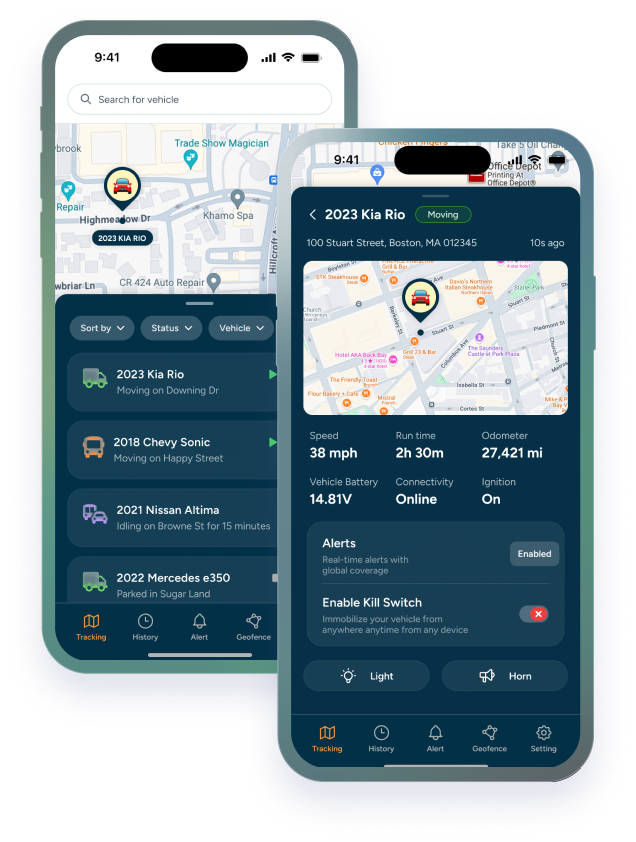
A GPS tracker for workers and fleet vehicles gives you a factual, time-stamped record of where every vehicle was, when it arrived, how long it stayed, and when it left. That record:
|
▸ |
Confirms good behavior from your honest techs (most of them) |
|
▸ |
Surfaces patterns that need addressing before they become expensive |
|
▸ |
Protects your business in liability disputes, insurance claims, and payroll audits |
|
▸ |
Improves scheduling because you have real job-duration data, not estimates |
|
▸ |
Reduces fuel costs through idle-time visibility and route optimization |
Field service owners often resist GPS because it feels like distrust. But consider the framing from the other direction: if you have a team of 10 techs and 9 of them are doing exactly what they should, those 9 deserve a system that protects their reputation and validates their work. The 1 who isn't, you need to know.
Real-time visibility isn't surveillance. It's the same standard of accountability that exists in every other part of your business — your invoices, your inventory, your financials. Your fleet should be no different.
|
The owners who implement employee vehicle tracking don't regret it. They regret waiting. |
Quick Reference: The 5 Problems at a Glance
|
Problem |
What You Lose |
The Signal |
|
Off-Route Stops & Side Jobs |
Billable hours, fuel, liability |
"He's always a little slow between jobs" |
|
Excessive Idling & Fuel Waste |
Fuel budget, vehicle lifespan |
Rising fuel costs blamed on gas prices |
|
Jobs Taking Longer Than Reported |
Accurate job costing, scheduling |
"Some jobs just take longer" |
|
Unauthorized After-Hours Use |
Fuel, wear, insurance coverage |
Trucks needing maintenance too soon |
|
Unverifiable Overtime |
Payroll costs, team trust |
Overtime clustered on Fridays or same techs |
Ready to see where your fleet actually is right now?
Real-time GPS fleet tracking gives field service businesses the visibility they need to run tighter operations, reduce waste, and hold every part of their business to the same standard of accountability.