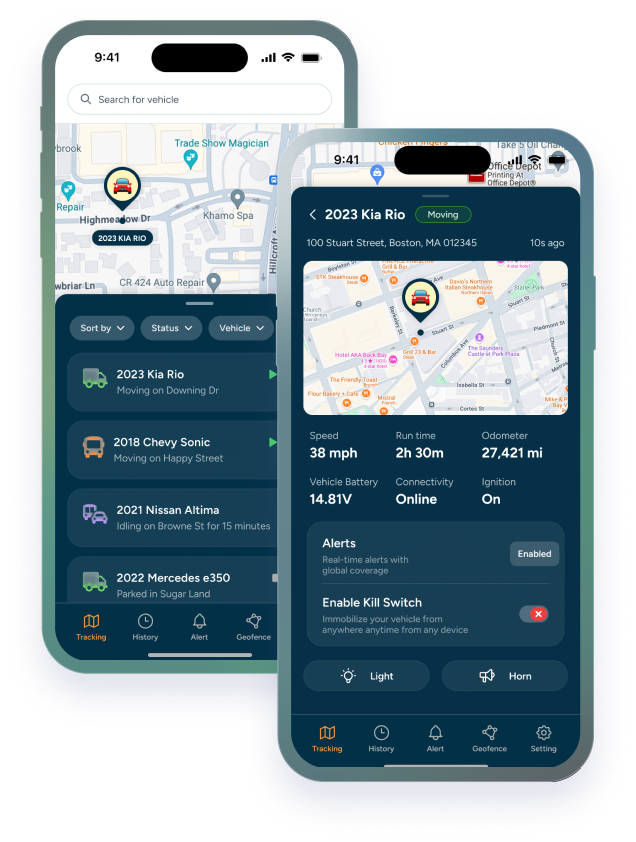

A regional HVAC company adds three technicians. A plumbing outfit expands into a second service area. An electrical contractor takes on a commercial contract and hires four new crew members. All good problems to have until the owner realizes they have no reliable way to know where any of their vehicles are, whether jobs are being completed on time, or why fuel costs jumped 18% last quarter.

As fleets scale, visibility breaks down. This is the visibility problem that's quietly hitting trades businesses across the board. Fleets are growing. Operational complexity is growing with them. But the tools most owners use to manage day-to-day operations haven't kept up.
Dispatch systems still show what was planned. Technicians still report what was done. But the actual reality in the field; timing, routing, delays, inefficiencies; becomes harder to see, harder to verify, and harder to manage. And once that visibility gap opens, inefficiencies start to compound across the entire operation.
Employee vehicle tracking is how that changes. This post covers what's driving fleet growth across HVAC, plumbing, and electrical to be complex, and where the companies running the tightest operations are pulling ahead.
|
40% of a technician’s day can be lost to non-productive time according to a Mckinsy report
|
47% |
15% to 30% |
|
What the data shows Across field service environments, the same inefficiencies consistently appear once operations scale beyond a handful of vehicles. These are not edge cases; they are structural patterns created by limited real-time visibility into field activity. These patterns show up clearly in technician productivity, scheduling reliability, and fleet performance. |
More Vehicles, More Complexity, And Where It Breaks Down
As fleets expand across HVAC, plumbing, and electrical operations, the same pattern emerges regardless of trade: complexity doesn’t scale linearly; it compounds. What begins as a manageable increase in workload quickly becomes a system-level visibility problem where operational decisions are made with incomplete or delayed information.
The most immediate pressure point is cost variability. Fuel expenses begin to rise disproportionately compared to job volume, but without granular visibility into routing behavior, idle time, or vehicle usage patterns, there is no reliable way to attribute that increase to specific operational causes. What looks like “higher fuel costs” is often a combination of inefficient routing, extended drive times between jobs, and untracked deviations in field behavior.
This lack of visibility extends into job execution itself. As teams grow, discrepancies between reported job duration and actual on-site activity become more common. Technicians may accurately report completion within expected windows, yet customer experiences and invoice timing often tell a different story. Without a system that connects location, time, and movement data, these inconsistencies cannot be validated, only reconciled after the fact, usually when a dispute arises.
Overtime introduces a similar challenge. In many growing fleets, overtime is still primarily self-reported or loosely tied to dispatch schedules. As a result, there is no reliable way to determine whether extended hours were driven by legitimate job complexity, inefficient routing, or untracked downtime between assignments. This creates both financial leakage and internal friction between operations and field teams.
Another increasingly common issue is unauthorized or unaccounted vehicle usage. As fleets scale, it becomes harder to distinguish between business-related movement and after-hours or off-route activity. Without structured tracking tied to work orders, vehicle movement outside business hours often goes unnoticed until fuel costs or mileage anomalies surface weeks later.
Even customer complaints begin to reflect the same structural gap. When arrival windows are missed or unclear, or when a technician’s timing does not match expectations, resolving disputes becomes difficult without objective location data. In these cases, businesses are forced to rely on assumptions rather than evidence, which increases resolution time and erodes customer confidence.
None of these issues are signs of operational failure. In fact, they are often indicators of growth. The underlying problem is not performance — it is visibility. Most field operations outgrow the systems they use to manage them long before they recognize it.
What emerges is a structural gap between planning and execution. And without a data layer that captures what actually happens in the field, that gap continues to widen as the business scales.
How HVAC, Plumbing, and Electrical Fleets Differ, And Where They're the Same
The operational pressures across trades have some variation worth understanding before choosing how to address them:
HVAC companies typically run high-volume seasonal schedules, with technicians completing multiple jobs per day. The visibility need is real-time — dispatchers need to know where the closest available tech is when an emergency call comes in, and customers expect accurate ETAs. Response time is a competitive differentiator in HVAC in a way it isn't always in other trades.
Plumbing operations often deal with more variable job durations. A call that looks like a two-hour fix can turn into a six-hour job. Without GPS tracking, it's difficult to distinguish between a genuinely complex job and one where the tech lost time to off-route activity. Route history — the recorded log of where a vehicle traveled and for how long — becomes the primary accountability tool.
Electrical contractors frequently work across commercial and residential projects with different timelines. Vehicle use is often less predictable, and crew dispatch can be more complex when multiple technicians need to coordinate at a single site. Real-time location data helps dispatchers sequence arrivals and reduce wasted drive time between jobs.
Despite these differences, the underlying problem is the same across all three: once a vehicle leaves the yard, the owner's visibility effectively ends — unless there's a tracking system in place.
|
Without GPS Tracking |
With TrackHawk GPS |
|
No record of actual arrival and departure times |
Timestamped location data for every job stop |
|
Fuel costs tracked per vehicle but not per route |
Route history ties fuel use to specific trips and drivers |
|
Overtime verified by tech self-reporting |
Actual field hours confirmed against GPS activity |
|
Customer ETAs based on estimates and check-in calls |
Real-time location shared with dispatch for accurate windows |
|
After-hours vehicle use goes undetected |
Movement alerts for activity outside designated hours |
Why Traditional Dispatching Leaves a Visibility Gap
Most trades businesses already use some form of scheduling or dispatching — whether that's a dedicated field service management platform, a shared calendar, or a group text thread. These tools handle job assignment well. What they don't handle is verification.
Once a tech is assigned a job and leaves the yard, the dispatcher's real-time visibility ends. If a customer calls to say no one showed up, there's no record to check. If a job runs long, there's no way to know whether it was a genuinely complex call or whether the route included two stops that weren't on the schedule. If a vehicle racks up mileage on a Saturday, there's no mechanism to trace it.
Employee vehicle tracking doesn't replace dispatch software — it closes the gap that dispatch software leaves open. The scheduling system tells the tech where to go. The GPS tracking system tells the owner and dispatcher what actually happened.
What High-Performing Trades Businesses Are Doing Differently
The operators running the most efficient HVAC, plumbing, and electrical businesses in 2026 share a few habits that separate them from the competition:
- They review GPS route history regularly, not just when a dispute or complaint comes in, but as a standard weekly management practice
- They use location data to have specific conversations with technicians about routing and time-on-site, rather than relying on self-reported summaries
- They've connected vehicle tracking data to their payroll and billing workflows, so disputes are resolved with records rather than arguments
- They treat GPS monitoring as an operational tool that protects techs from false accusations as much as it creates accountability for the business
That last point matters more than most owners expect. The question of how to introduce GPS tracking to a field team is a real one, and the businesses that handle it well tend to frame it around accuracy, for payroll, for customers, for scheduling — rather than around surveillance.
When that framing lands, technicians often become advocates for the system. It protects them from billing disputes they didn't cause and from overtime challenges that don't reflect their actual hours. That shift in dynamic is one of the more consistent outcomes reported by trades operators after implementing employee vehicle tracking.
The Cost of Not Knowing
The default position for most growing trades businesses is to manage by trust and check in by phone. That works until the margin gets tight, a customer disputes a bill, or an overtime report doesn't match what the schedule shows.
At that point, the absence of data isn't just inconvenient. It's expensive. There's no record to resolve the dispute. No route history to verify the claim. No way to tell whether the problem is systematic or isolated.
Technician tracking software turns that reactive dynamic into a proactive one. Instead of investigating problems after they surface, operators can see patterns before they become costly — which routes are inefficient, which vehicles are idling, which jobs are consistently running over time.
For HVAC, plumbing, and electrical businesses running more than five vehicles, that shift from reactive to proactive is where the real operational value lives.
See What's Actually Happening in Your Fleet
Trackhawk gives HVAC, plumbing, and electrical businesses real-time vehicle visibility and route history, without the enterprise price tag.
|
→ Schedule a Demo at trackhawkgps.com |