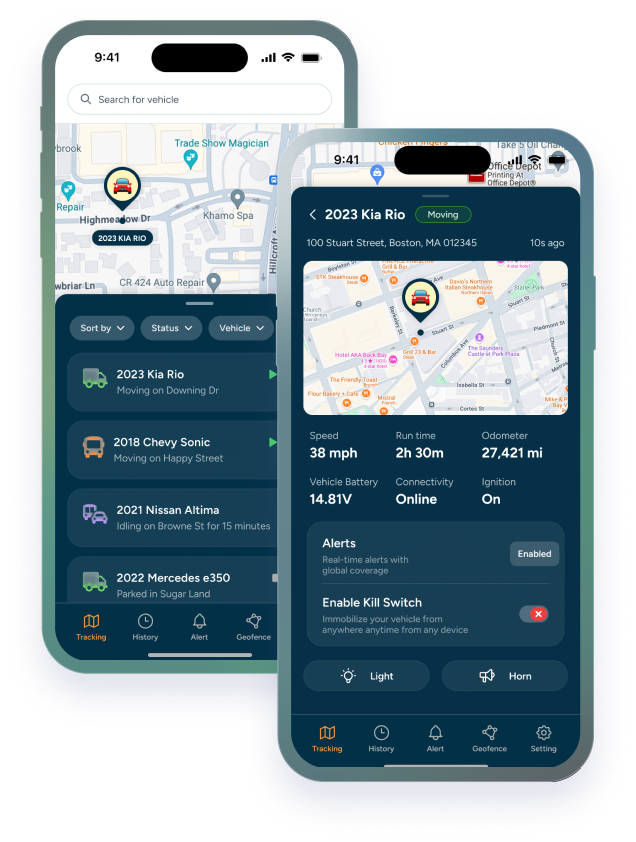

If you run an HVAC or plumbing company, your trucks are your business. The minute a van sits idle, takes a detour, or burns through fuel on an inefficient route, that’s money out of your pocket. GPS tracking is one of the most practical tools available for getting that money back; not through micromanagement, but through visibility.
This guide breaks down exactly what GPS tracking does, what it costs, where it pays off for service companies, and what actually happens when businesses like yours put it to work.
What GPS Tracking Actually Does (Beyond “Dots on a Map”)
Most people think of GPS as a map that shows where vehicles are. That’s the starting point, not the full picture. For HVAC and plumbing operations, a properly configured GPS system is a real-time operations tool that answers the questions that cost you money when you don’t have answers to them.
|
The Question You Can’t Answer Today |
What GPS Lets You See |
|
Where is my closest truck right now? |
Dispatch the nearest tech to an urgent job without calling around. Cut response time. Win more same-day calls. |
|
Did my crew actually go to that job site? |
Verify arrival and departure times automatically. Stop billing disputes before they start. |
|
How long did they sit with the engine running? |
Identify idle time that burns fuel and adds engine wear. Set alerts for anything over 10 minutes. |
|
Is someone taking the van off-hours? |
After-hours movement alerts tell you if a vehicle leaves the yard when it shouldn’t. Instantly. |
|
Did that speeding incident actually happen? |
Speed reports give you facts, not he-said-she-said. Useful for insurance and liability purposes. |
|
How many stops did we make today? |
Job-by-job stop reports show you actual time on site vs. time driving vs. time unaccounted for. |
The core shift is from “I think” to “I know.” That change touches dispatch, payroll accuracy, fuel costs, customer billing, and how you handle employee accountability.
What It Typically Costs (and What Impacts Pricing)
GPS tracking forfield service companies breaks into two costs: hardware and software. Most providers bundle them in different ways, so it helps to understand what you’re actually paying for.
|
Cost Component |
Typical Range |
|
Hardware (GPS device per vehicle) |
$10 – $150 one-time cost per unit, depending on features |
|
Monthly software / platform fee |
$15 – $45 per vehicle/month for standard plans |
|
Installation |
Plug-in OBD devices require no installation. Some battery-powered trackers require minimal installation. Hardwired units take 30–60 min per vehicle. |
|
Contract terms |
Most providers offer month-to-month or annual plans. Annual typically saves 15–20%. |
For a 5-vehicle HVAC or plumbing fleet, you’re typically looking at $75–$175/month in platform fees. That’s before accounting for fuel savings, overtime reduction, or dispute resolution; all of which tend to outpace the cost within the first 60–90 days.
|
What Impacts Price Most: Fleet size, update frequency (real-time vs. every few minutes), add-ons like dashcams or maintenance alerts, and whether you go month-to-month vs. annual. Larger fleets almost always qualify for volume pricing. |
Where HVAC & Plumbing Companies Lose Time and Money
Service companies tend to have a few specific places where money quietly disappears. GPS tracking surfaces each of them.
|
Where It Disappears |
What’s Actually Happening |
|
Unauthorized vehicle use |
Trucks used after hours or on weekends — personal errands, side jobs, or worse. Without tracking, you find out through fuel receipts, vehicle wear, or a customer complaint. |
|
Inefficient routing |
Techs driving past one job to reach another because dispatch doesn’t have real-time location data. 20–30 extra minutes per tech per day adds up fast across a fleet. |
|
Payroll padding |
Clock-in and clock-out don’t always reflect reality. GPS arrival and departure timestamps let you cross-reference timesheet claims with actual vehicle data. |
|
Fuel waste from idling |
Service vans idling for 30–60 minutes a day are common. At current fuel prices, that’s $600–$1,200 per vehicle per year in wasted fuel alone. |
|
Missed or late arrivals |
Customers who call to complain about a 4-hour window often don’t call back. GPS timestamps give dispatchers accurate ETAs, and a heads-up when a tech is running behind. |
|
Unverifiable job times for billing |
Without arrival/departure records, billing disputes with customers or insurance companies become your word against theirs. GPS solves this automatically. |
How GPS Improves Routing, Fuel Use, and Job Completion
The operational improvements from GPS tracking aren’t theoretical. They follow predictable patterns that play out across nearly every service company that deploys it.
Routing: The biggest gain usually comes in the first week.
When dispatchers can see all vehicles in real time, they stop routing based on who’s closest on paper and start routing based on who’s actually closest right now. For HVAC and plumbing companies where emergency calls come in unpredictably, that flexibility turns into faster response times and more jobs completed per day.
Fuel: Idle alerts and route efficiency compound over time.
Companies that monitor idle time consistently reduce fuel costs by 10–15% within the first quarter. That’s not from forcing behavior change — it’s from giving drivers visibility into their own habits. Most unnecessary idling stops once people know it’s visible.
Job Completion: More jobs per day, fewer gaps in the schedule.
When dispatch has real-time location data, they can backfill schedule gaps the moment a tech wraps a job early. That one improvement, consistently applied, can add one additional job per tech per week for a busy team.
|
Improvement Area |
Typical Result |
|
Average fuel savings per vehicle |
10–15% reduction within first 90 days |
|
Reduction in unauthorized after-hours use |
Drops to near zero once vehicles are tracked |
|
Dispatch efficiency improvement |
15–25% reduction in drive time per job |
|
Payroll accuracy |
Verified start/stop times reduce timesheet inflation |
|
Customer dispute resolution |
GPS logs provide verifiable job records in seconds |
Common Objections (and What Actually Happens in Practice)
Most HVAC and plumbing owners hear a version of the same pushback from employees when GPS tracking comes up. Here’s what those objections look like; and what actually happens once the system is in place.
|
The Objection |
What Actually Happens |
|
“You don’t trust us.” |
Reframe it clearly: this is about protecting the company, reducing paperwork, and backing up your team when a customer disputes a job time. Most employees come around quickly once they realize GPS protects them too. |
|
“We’re being monitored every second.” |
You’re not reviewing live feeds minute-by-minute. The value is in reports and alerts, not surveillance. Teams adjust to this once they see how the tool actually gets used. |
|
“This will hurt morale.” |
In most cases, morale problems were already present — caused by uneven accountability. When everyone is held to the same standard automatically, resentment toward favoritism goes down, not up. |
|
“We’ve managed fine without it.” |
You’ve managed without knowing what you’re losing. Fuel waste, unauthorized use, and routing inefficiency are invisible costs. GPS doesn’t create a problem — it shows you what was already there. |
|
“What about personal privacy?” |
Standard practice is tracking ends at end of shift or when vans return to yard. Clear policies set expectations upfront and eliminate ambiguity on both sides. |
How Trackhawk GPS Works for HVAC and Plumbing Companies
Trackhawk GPS brings everything covered in this guide into a single platform built for service fleets that don’t have time to manage complicated software.
|
Feature |
What It Does for Your Operation |
|
Real-Time Location |
See every vehicle on one live map. Dispatch the nearest tech instantly. No more calling around to find who’s available. |
|
Idle & Fuel Alerts |
Get notified when a vehicle exceeds your idle threshold. Review fleet-wide fuel usage in a single report. |
|
After-Hours Alerts |
Automatic notifications if a vehicle moves outside work hours or outside a defined area. Know immediately, not the next morning. |
|
Trip History & Job Records |
Every trip logged with start time, stop time, location, and duration. Verifiable job records available in seconds. |
|
Driver Behavior Reports |
Speed, hard braking, and idle events tracked per driver. Useful for insurance discounts and liability protection. |
|
Easy Setup |
Plug-in OBD devices activate in minutes. Hardwired options available for full integration. No IT team required. |
|
The Bottom Line: GPS tracking for HVAC and plumbing companies isn’t about watching employees. It’s about running a tighter operation with the information you need to make faster decisions, reduce waste, and protect your business from the costs you can’t see yet. |
TrackHawk GPS brings all of it together in a single platform built for the way field service companies actually operate. If you’re still managing dispatch, fuel, and accountability manually, or with disconnected tools; it’s time to see what a smarter system looks like.
Ready to see Trackhawk GPS in action? Book a free demo with our team today.