
If you're financing vehicles in-house, you already know the exposure. One missed payment becomes two, two becomes a skip, and by the time you track the car down it may be out of state, damaged, hidden, or worth less than what you're owed.
A GPS kill switch for car dealers is one of the most useful tools available for closing that gap. Not because it lets you play hardball with customers, but because it creates a predictable, documented compliance structure that protects your inventory without turning every missed payment into a confrontation.
This guide covers how kill switches work, when dealers should use them, how automation can support payment behavior, and the best practices that keep the process consistent, responsible, and safer for both your dealership and your customers.
|
Related Reading Pair this with our guide Managing BHPH Vehicles Without Losing Control, it covers the full picture of GPS tracking for BHPH dealers, including payment monitoring and risk escalation frameworks. |
What a Kill Switch Is and How It Works
A kill switch is a device installed in a vehicle that allows an authorized operator to prevent the vehicle from starting. In dealer and BHPH use cases, this is usually a starter interrupt device rather than a system that cuts power while the vehicle is moving.
That distinction matters. Modern kill switch systems should not shut down a vehicle at speed. They are designed to prevent ignition or restart under controlled conditions. Once payment is made and confirmed, the vehicle can be re-enabled according to the dealership’s policy and system setup.
Most dealer workflows use one of two approaches:
|
Type |
How It Works |
|
Scheduled Disable |
Pre-programmed with the customer's payment schedule. If no payment signal is received by the due date, the system automatically disables the starter after a defined grace period. |
|
Manual Disable |
A staff member triggers the disable command through a dealer dashboard after confirming a payment is overdue and all required notifications have been sent. |
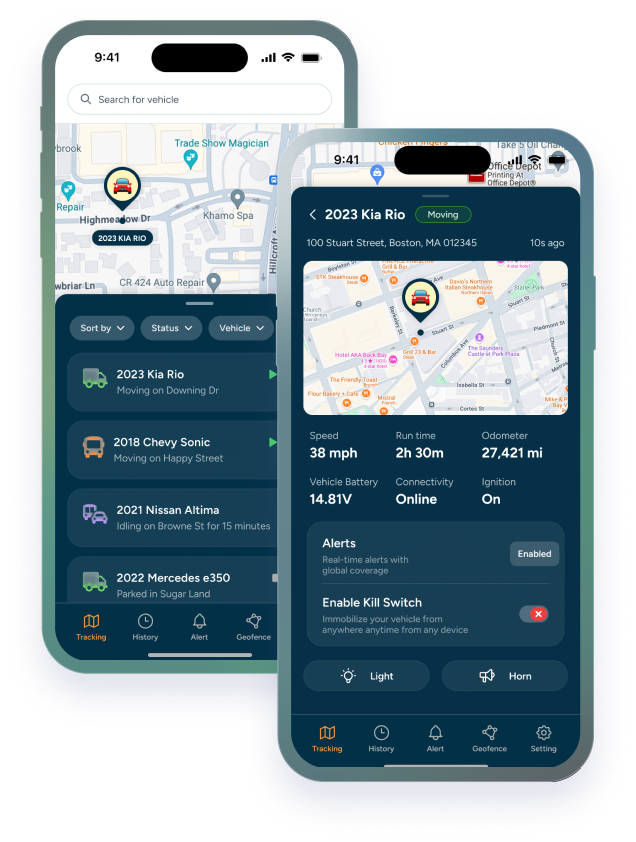
When integrated with a GPS tracking platform, kill switches gain a critical layer of intelligence. You can confirm where a vehicle is before taking action, review account context, and avoid making decisions without location visibility.
Trackhawk’s GPS Kill Switch supports this type of tracking-plus-control workflow for businesses that need more than a standalone starter interrupt.
When Dealers Should Use Remote Immobilization
A kill switch is a last-resort tool within a structured payment enforcement process ; not a first response to a late payment. Deploying it too early damages customer relationships and, in some states, may expose you to legal liability.
Here's how responsible escalation should look before a disable is ever triggered:
|
Timeline |
Action |
|
Days 1–5 Low Risk |
Automated payment reminder via text or email. No manual intervention needed — the system handles it. |
|
Days 6–15 Watch |
Direct outreach from your collections team. Confirm via GPS that the vehicle is still local. Document all contact attempts. |
|
Days 16–30 Escalate |
Send formal written notice that starter interrupt may be activated. This notice period is legally required in many states. Continue contact attempts. |
|
30+ Days Activate |
After documented attempts and required notice period, activation of the starter interrupt is appropriate. GPS data provides location for repossession if needed. |
Automating Actions Based on Payment Behavior
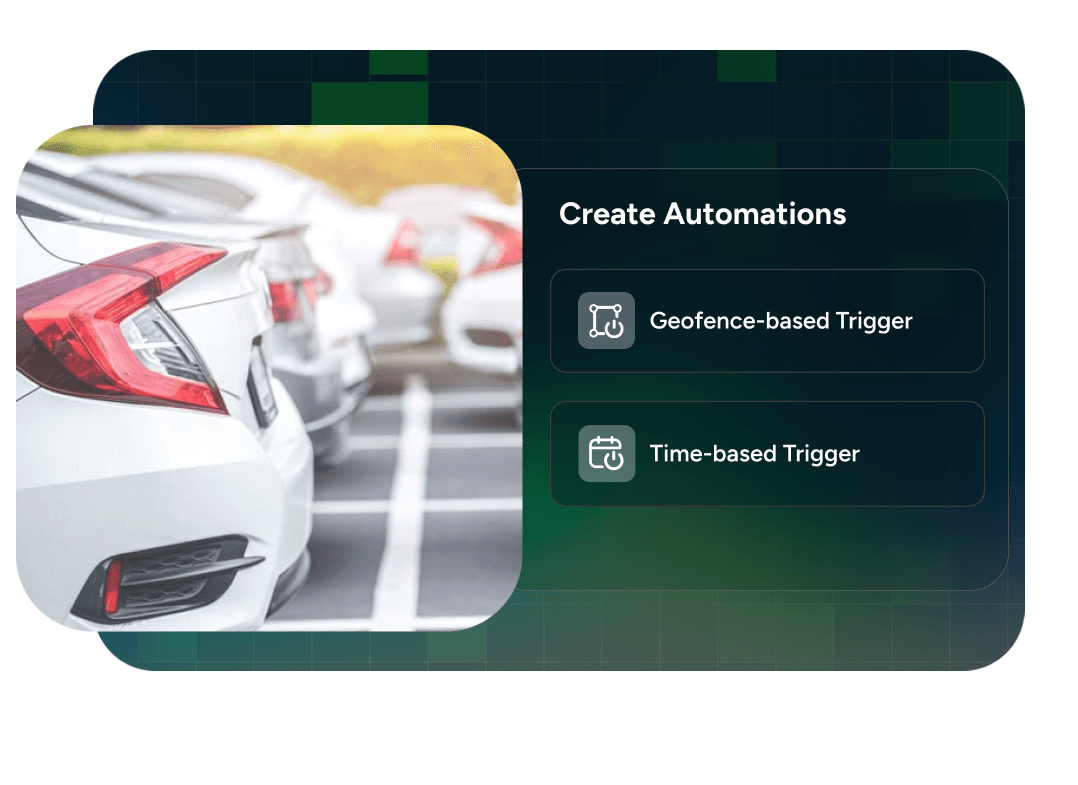
The real power of a GPS kill switch for car dealers isn't the disable function; it's the automation layer around it. When your system is connected to your payment processing, the entire enforcement cycle can run without manual intervention for the majority of your portfolio.
A well-configured automated workflow:
|
Payment Status |
Automated System Action |
|
On time |
No action. Cycle resets automatically. |
|
1 day late |
Automated text reminder sent with payment link. |
|
3 days late |
Second reminder, escalating urgency. Staff flagged in dashboard. |
|
7 days late |
Warning notification: starter interrupt is enabled and may be activated. |
|
14+ days late |
Starter interrupt activated after grace period. Vehicle cannot start until payment made. |
|
Payment received |
Starter re-enabled automatically within minutes. Customer confirmation sent. |
This automation removes the emotional labor of chasing payments from your staff and creates a consistent, documented process that's defensible if a customer ever disputes how they were treated.
Reducing Risk Without Manual Intervention
Manual collections is expensive, inconsistent, and emotionally draining. When staff are making judgment calls on which accounts to chase and when, you get uneven enforcement — which creates both legal exposure and customer resentment.
Automation levels the playing field. Every customer in your portfolio is treated the same way, on the same timeline, with the same notifications. That consistency is your protection.
Additional risk reduction benefits:
- Fewer skips: Customers who know a disable is automated are more likely to pay on time — the consequence is real and consistent, not dependent on whether your collector gets around to calling.
- Faster recoveries: When a vehicle does need to be repossessed, GPS location data means your team knows exactly where it is. No skip tracing, no guesswork.
- Documented compliance: Every notification sent, every GPS ping, every enable and disable event is logged with a timestamp. That record protects you in any dispute.
- Reduced repo costs: Many dealers find that GPS tracking combined with starter interrupt significantly reduces how many vehicles reach full repossession — customers respond to the automation before it gets that far.
How Trackhawk Combines GPS + Kill Switch + Alerts
Trackhawk GPS brings the entire stack together in one platform; not three separate vendors, three separate logins, and three data sources to reconcile.
|
Feature |
What It Does for Your Dealership |
|
Real-Time GPS Tracking |
See every vehicle in your portfolio on a single map. Check location before any disable event. Set geofence alerts for vehicles that leave a defined area. |
|
Integrated Kill Switch |
Enable or disable vehicles directly from the TrackHawk dashboard, or let the system handle it automatically based on payment rules you configure. No separate app or vendor. |
|
Payment Automation |
Connect your payment schedule to the Trackhawk fleet app. The platform monitors due dates and triggers the notification and escalation workflow automatically. |
|
Customer Alerts |
Automated push and email notifications keep customers informed at every stage, reducing disputes and increasing payment before a disable is ever needed. |
|
Audit Logs |
Every event is logged: location pings, ignition activity, enable/disable commands, notification sends. Your compliance record is built automatically. |
Best Practices for Responsible Use
Kill switch technology is powerful, and that means it needs guardrails. Dealers who use it carelessly face legal exposure, customer complaints, and reputational damage. Dealers who use it well see it become the quiet backbone of their collections process.
|
Non-Negotiable Rules |
|
Disclose in the contract |
Every customer must sign an acknowledgment that a GPS device and starter interrupt is installed. Legally required in most states. |
|
Never disable in motion |
A responsible system only prevents ignition — it does not cut power to a running vehicle. Verify your hardware operates this way. |
|
Check GPS before disabling |
Confirm the vehicle is in a safe location; not a hospital, school zone, or area with severe weather — before activating. |
|
Honor grace periods |
Build 24–72 hours past due into your automation before any disable triggers. Protects you legally and avoids unnecessary escalations. |
|
Re-enable immediately |
The moment payment is confirmed, the vehicle must be re-enabled automatically. Never use a disable as ongoing leverage. |
|
Know your state laws |
Kill switch regulations vary by state. Consult legal counsel before deployment. Requirements around notice periods and contract language differ significantly. |
How to Introduce Kill Switch Technology to Customers
The customer conversation matters. If you present the device as punishment, you create resistance. If you explain it as part of how the dealership can approve more buyers and protect the financing program, the conversation becomes more straightforward.
A better framing is:
- The device is disclosed upfront.
- It protects the vehicle and the financing program.
- It supports recovery if the car is stolen.
- It helps the dealership approve customers who might not qualify elsewhere.
- It is used according to written policy, not staff emotion.
That transparency can reduce friction and encourage customers to communicate before a payment problem becomes a recovery problem.
The Bottom Line
A GPS kill switch for car dealers is not a weapon. It is a system. Used correctly, it replaces the chaos of manual collections with a structured, automated, documented process that protects inventory and keeps customer relationships from deteriorating into confrontation.
When integrated with real-time GPS tracking, geofencing, alerts, and audit logs, starter interrupt technology becomes one of the most practical tools in a BHPH operation. It can reduce guesswork, speed up recovery, and give your team a consistent escalation path.
Trackhawk GPS brings tracking, Smart Kill Switch technology, alerts, and dealer-focused visibility together in one platform. If you're still managing this manually or with disconnected tools, it may be time for a better system.
Talk to Trackhawk GPS to see how GPS tracking and kill switch technology can support your dealership.