
Running a buy here pay here lot means you carry the risk that banks won't. You've approved customers with thin credit, structured the deal yourself, and handed over the keys, all while knowing that the moment a payment stops coming in, you may not know where your asset is.
That's the BHPH reality. And it's why more dealers are turning to GPS tracking technology, not as a punitive tool, but as a practical system for protecting inventory, managing risk, and keeping customer relationships from breaking down entirely.
This guide walks through how to manage BHPH vehicles without creating unnecessary friction, from the moment a deal is signed to how you handle a missed payment weeks or months later.
Before diving into the systems, it’s worth checking whether your current setup has gaps. We covered that in The BHPH Risk Audit.

Monitoring Customer Payment Behavior
In traditional financing, the bank monitors the loan. In BHPH, that responsibility falls entirely on you. Payment behavior is the first signal, and the earlier you catch a warning pattern, the more options you have.
GPS tracking does not replace a solid payment management process, but it complements it. When a customer misses a payment and you can confirm the vehicle is still in your city, parked at their home address each night, you are likely dealing with a cash flow issue, not an intent to skip. That distinction changes your approach entirely.
What smart BHPH dealers track alongside payment records:
- Vehicle location consistency: Is the customer still local and still showing up at work?
- Mileage patterns: Sudden spikes can signal commercial use, a move, or unexpected vehicle strain.
- Ignition activity: A vehicle that has not moved in days may indicate a customer hardship, breakdown, or abandonment risk.
- Location history around payment due dates: Helps distinguish avoidance from genuine hardship.
- Device health: A tracker that stops reporting should be investigated before an account becomes delinquent.
When you combine payment data with vehicle intelligence, you move from reactive collections to informed risk management.
Tracking Vehicles Without Creating Friction
The biggest concern dealers have when installing a BHPH GPS tracking device is how customers will react. That concern is valid, but it is also manageable.
The key is transparency. Disclose the device in your contract. Explain it plainly: the GPS protects the dealership’s investment, helps recover the vehicle if it is stolen, and supports the financing program that makes approval possible. Most customers accept this when it is framed honestly and introduced as a routine part of BHPH financing.
Practical ways to keep tracking non-confrontational:
- Include a GPS disclosure clause in your retail installment contract.
- Make the disclosure a routine part of onboarding, not a surprise.
- Avoid checking customer locations daily unless a payment or recovery issue arises.
- Use geofencing alerts instead of manual monitoring so your team is notified only when something needs attention.
- Never contact a customer about their location unless it is directly tied to payment, recovery, contract, or safety concerns.
- Train your staff on appropriate use. The device is a financial protection tool, not a surveillance system.
Customers who understand the purpose of BHPH GPS tracking are less likely to feel blindsided and more likely to maintain a cooperative relationship with your dealership.
Handling Missed Payments and Risk Escalation
Missed payments are inevitable in BHPH. The question is not whether they will happen. It is how prepared you are to respond at each stage.
A GPS tracking system gives you the ability to calibrate your response based on actual risk, not just days past due.
1-10 Days Past Due
If the vehicle is local, the customer is active, and the movement pattern looks normal, this may be a timing or cash-flow issue. Standard reminder outreach is appropriate. No escalation may be needed.
11-30 Days Past Due
Check vehicle location history. Is the car still in the area? Still going to regular locations? Begin direct contact and document all attempts. If the vehicle has moved out of state, stopped reporting, or shows unusual movement, escalate sooner.
30+ Days Past Due
Use GPS data to establish vehicle location for recovery planning. If a starter interrupt device is in place, this is the stage where your dealership may consider escalation, but only after following applicable law, contract terms, notice requirements, and internal policy.
Never use a kill switch as a first-resort pressure tactic. Use it as part of a documented process.
Using GPS Data for Smarter Follow-Ups
One of the most underused advantages of BHPH GPS tracking is how it changes the quality of customer outreach. Instead of making a generic “your payment is late” call, your team can lead with context.
For example, if the customer has been driving to work consistently but has not made a payment, you know the vehicle is functioning and the customer may still be employed. That is a collection conversation. If the vehicle has not moved in a week and the customer is not answering, the risk profile is different.
GPS-informed follow-up strategies that work:
- Call during windows when the customer is more likely to be available.
- Use location history to confirm whether the customer may have moved.
- Cross-reference driving patterns with payment history to identify seasonal or recurring delinquency.
- Offer payment arrangement options when the vehicle is still being maintained and used responsibly.
- Escalate faster when a vehicle leaves expected areas or stops reporting.
The goal is not to catch people. The goal is to have better information before you make contact, so every conversation moves toward resolution rather than confrontation.
How Kill Switches Help Enforce Compliance
A starter kill device, often called a kill switch, is one of the most useful tools in the BHPH dealer’s toolkit when it is disclosed, documented, and used responsibly. When integrated with GPS tracking, it creates a structured compliance mechanism that works quietly in the background.
Here is how it typically works: the system is aligned with the customer’s payment schedule. If payment is made on time, no interruption occurs. If payment is missed, the system can send reminders and warnings. After a defined period and required notice, the starter interrupt may be activated so the vehicle cannot be started until the account is resolved.
Used correctly, a kill switch can reduce confrontation because the process is consistent. The system enforces a policy rather than relying on emotional, inconsistent manual judgment.
Important rules for responsible use:
- Always disclose the device in your contract.
- Build in warning periods and give the customer advance notice where required.
- Re-enable promptly once payment or resolution is confirmed.
- Understand state laws and consult legal counsel before deployment.
- Use GPS location data before any immobilization action.
- Never interrupt a vehicle in a way that creates a safety risk.
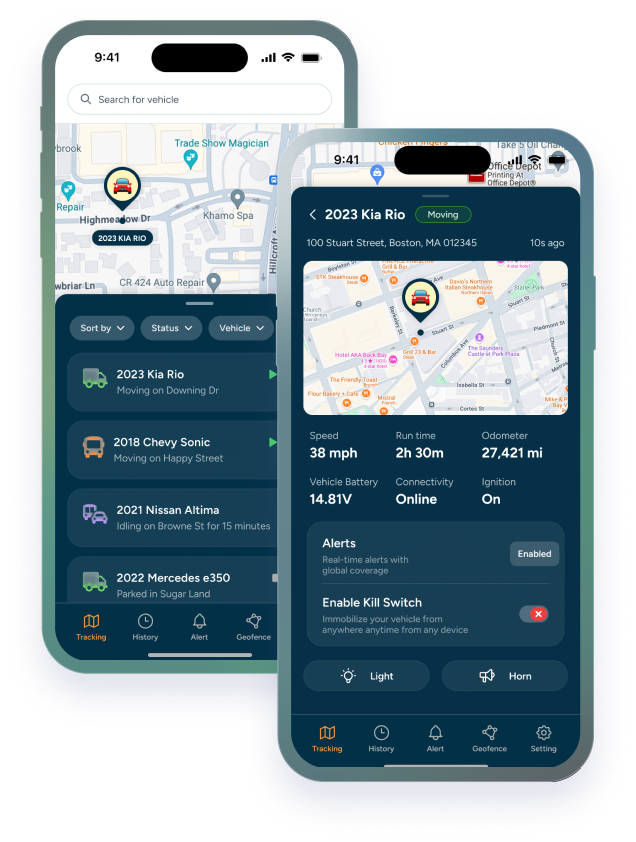
Trackhawk’s GPS Kill Switch can support dealers who need starter-interrupt functionality tied to real-time vehicle visibility.
Using the Dashboard as an Operating System
The best BHPH tracking setup is not just a map. It is an operating system for risk management.
A useful dashboard should help you:
- See your full portfolio in one place
- Filter by account status
- Review location history
- Flag high-risk accounts
- Monitor devices that stop reporting
- Set geofences on accounts that need attention
- Review alerts before calling a customer
- Document escalation actions
This is where tracking becomes operational, not just informational. Your team should not have to guess which accounts need attention. The system should help surface them.
The Bottom Line for BHPH Dealers
Managing a BHPH portfolio without GPS technology means flying blind on valuable assets. Every missed payment becomes a guessing game. Every recovery starts from zero. Every follow-up call has less context than it should.
With the right BHPH GPS tracking system in place, you have visibility, documentation, and escalation tools that let you run a tighter, more professional operation while reducing some of the friction that makes collections difficult.
Trackhawk GPS is built for this use case. The platform gives BHPH dealers real-time vehicle tracking, starter-interrupt support, geofencing alerts, and location history that can help protect your portfolio at every stage of the deal lifecycle.
If you're still managing BHPH risk without GPS, it may be time to change that.
Ready to protect your BHPH portfolio? Contact the sales team at Trackhawk GPS today.