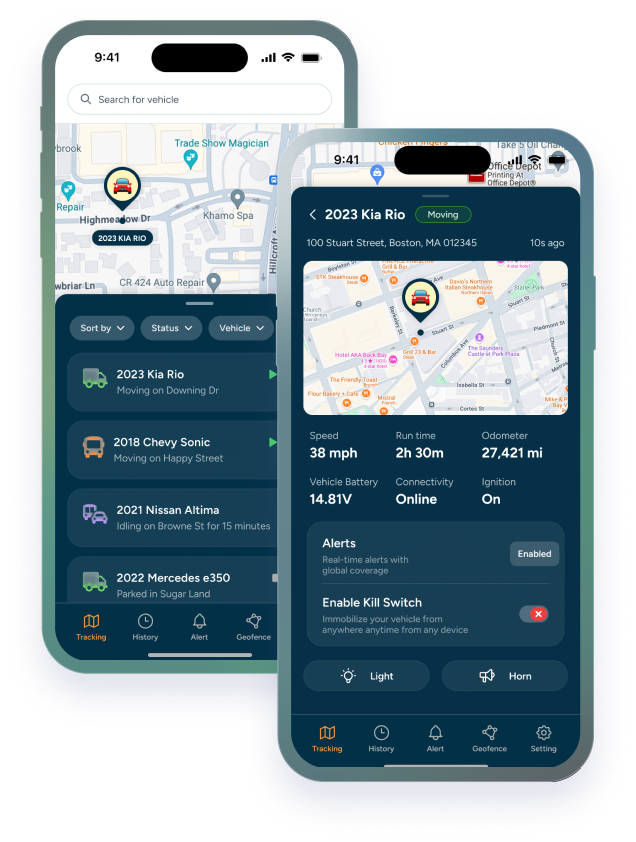

Modern business fleets face growing risks related to theft, unauthorized vehicle use, and operational inefficiency. Today, nearly 80% of commercial fleets in North America and Europe utilize GPS tracking systems, reflecting our industry’s shift toward smarter, more secure operations. This movement is driven not only by the need for fuel savings and insurance compliance but also by the rise of advanced features like remote immobilization.
With over 30 years of automotive industry experience, we understand that whether your priority is asset protection, cost savings, or building operational resilience, exploring the role of remote immobilization GPS tracker solutions is now essential for any forward-looking fleet.
TL;DR / Key takeaways:
- Remote immobilization adds action to GPS tracking by helping businesses stop unauthorized vehicle use when appropriate.
- Basic GPS tracking shows location, while immobilization can add another layer of control for theft response and recovery.
- BHPH dealers, rental fleets, commercial operators, and asset-heavy businesses may benefit most when vehicle loss or misuse creates real business risk.
- Businesses should review consent, local rules, internal access, and safe-use policies before using immobilization features.
This guide is for business owners, fleet managers, rental operators, BHPH dealers, and operations teams evaluating GPS tracking with immobilization. It is most relevant when theft risk, unauthorized use, overdue returns, or vehicle recovery needs make basic location tracking feel insufficient.
What Remote Immobilization Means
A remote immobilization GPS tracker is a device that combines real-time GPS tracking with the ability to disable a vehicle’s engine remotely. As defined by an industry expert, “Remote immobilization allows fleet managers to disable a vehicle's engine remotely, preventing unauthorized use and aiding in the swift recovery of stolen assets.” This functionality is typically achieved by integrating the tracker with the vehicle’s electronic control unit and managing it through a secure web or mobile interface.
Many advanced systems use a starter interrupt technique that makes certain vehicles cannot be shut off while driving, only once safely parked. In plain English, starter interrupt means the system can stop the starter from engaging under approved conditions, rather than shutting down a moving vehicle.
The key benefit: businesses gain direct control over their vehicles—even when miles away.
By leveraging features like starter interrupt, you can make certain that only authorized users operate your vehicles, and intervene immediately in the event of theft or policy violations. For those exploring advanced solutions, our GPS kill switch option offers this level of protection and control.
How Remote Immobilization Differs from Basic GPS Tracking
When comparing basic GPS tracking to advanced GPS tracker with engine disable solutions, the distinction is about more than just location monitoring. Standard GPS tracking delivers real-time vehicle positioning, route history, and alerts for geofence breaches. However, it cannot actively prevent unauthorized use or halt theft in progress.
Below, we cover what to look at when comparing basic GPS tracking with immobilization features, including function, theft response, recovery support, and control.
|
Basic GPS Tracking |
GPS Tracker with Immobilization |
|
|
Function |
Location, alerts, geofencing |
Adds remote engine disable/kill switch |
|
Theft Response |
Reactive (track after theft) |
Proactive (can prevent movement) |
|
Recovery Rate |
Dependent on tracker/discovery |
Faster, higher recovery rate |
|
Control |
Monitoring only |
Enable/disable vehicle remotely |
A construction company recently recovered a stolen Bobcat skid steer valued at $30,000 in just 15 hours using a GPS tracking system with immobilization capabilities—minimizing both loss and downtime.
Some thieves attempt to block GPS signals with jammers; however, solutions that use alternative technologies or backup channels can still enable recovery.
When evaluating solutions, consider whether you need simple visibility or the ability to take immediate action. For those seeking both, our GPS kill switch may be the right fit.
Business Situations Where Immobilization May Matter
It’s a common question: When does a business actually need remote immobilization, and not just GPS tracking?
Real-world scenarios illustrate the value. For example, a European surveying company faced a theft of €250,000 in equipment. Thanks to remote immobilization, all stolen assets were swiftly recovered within hours, protecting the business from significant disruption.
Use cases like this apply to BHPH dealers, rental fleets, commercial vehicles, and businesses with high-value assets or vehicles at risk of unauthorized use.
In fact, remote immobilization technology now serves thousands of businesses in sectors from field services and asset management to emergency fleets.
commercial vehicle GPS immobilization features are especially relevant for companies that:
- Operate in high-theft regions or sectors
- Rely on timely vehicle recovery for business continuity
- Need to enforce payment, rental, or return agreements
Businesses often report a meaningful reduction in theft and unauthorized equipment use after implementing advanced GPS immobilizer solutions.
If your business faces these risks, consider exploring our BHPH GPS tracking or rental vehicle GPS tracking options.
What to Ask Before Using Remote Immobilization
Before adopting a remote vehicle shutdown system or a GPS tracker with starter interrupt, you should carefully review compliance, safety, and operational policies. As a legal advisor notes, “When implementing remote immobilization systems, it's imperative to comply with local laws regarding vehicle disabling and to obtain explicit consent from drivers to avoid potential legal liabilities.” This means:
- Understanding state or local rules regarding remote immobilization
- Clearly disclosing tracking and immobilization features to drivers or customers
- Obtaining written consent when required
- Defining internal policies for when and who can trigger immobilization
It’s also important to restrict system access and store all tracking data securely, protecting against unauthorized usage.
Following best practices, such as only immobilizing a vehicle when stopped, helps keep drivers and the public safe.
For a deeper dive into the legal context, see Kill Switch Law.
Where Immobilization Fits in a Fleet Policy
Remote immobilization works best when it is treated as part of a clear operating policy, not a feature used casually. Businesses should decide who can approve immobilization, what situations qualify, and how driver or customer consent is documented.
For teams using a GPS tracker with starter interrupt, that policy should line up with the safety considerations already covered above, including restricting access and using immobilization only when the vehicle is stopped.
How Smart GPS Solutions Support Better Control
Modern fleet management GPS immobilizer systems do more than prevent theft—they enable smarter, safer, and more efficient fleet operations. Our solutions bring together live tracking, geofencing, driver behavior insights, maintenance reminders, and hardware/software integration. Fleets that use GPS tracking have seen notable fuel savings and faster investment recovery.
We back each solution with a lifetime hardware warranty and a 30-day money-back guarantee, providing additional peace of mind.
If you’re planning a hardwired rollout or need installation support, our Installer Locator connects you with qualified professionals.
For business owners, investing in advanced GPS solutions means more than just knowing where vehicles are—it means gaining true operational control and measurable ROI.
The Practical Takeaway for Business Owners
Ultimately, a business fleet GPS with kill switch or a remote engine immobilizer for fleets is most valuable when location tracking alone isn’t enough. If your business faces risks like theft, late payments, or operational interruptions, remote immobilization offers an actionable layer of protection.
Just make sure your policies fit local laws and best practices, and evaluate your real-world risk to determine if remote immobilization is the smart move for your fleet.
If you’re weighing this for your fleet, use the questions above as a practical starting point for your internal review.
Frequently Asked Questions
What does remote immobilization mean for a business fleet?
Remote immobilization means a business can use a GPS-connected system to prevent a vehicle from being started or moved once the right safety and policy conditions are met. It gives teams a way to act when tracking alone is not enough.
Is a GPS tracker with engine disable different from standard GPS tracking?
Yes. A GPS tracker with engine disable adds a control layer to location tracking, so teams can monitor vehicles and take action in cases like unauthorized use, theft risk, or agreement violations.
Who should consider a remote vehicle shutdown system?
A remote vehicle shutdown system may be a fit for BHPH dealers, rental fleets, commercial vehicle operators, and businesses managing assets where recovery time and unauthorized use are real concerns.
What should businesses review before using immobilization?
Businesses should review local rules, driver or customer disclosure, written consent when required, internal approval policies, access controls, and safe-use rules such as only immobilizing a vehicle when stopped.