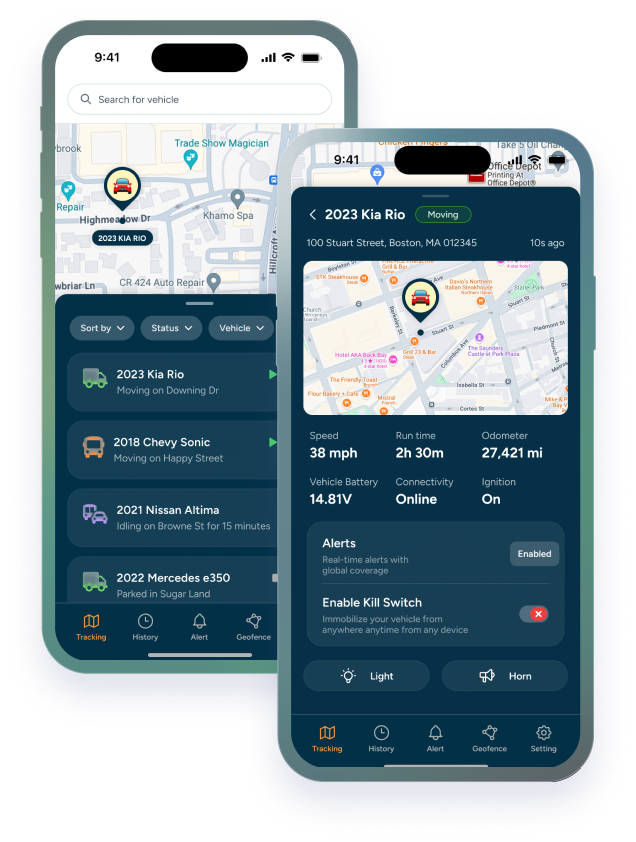

The U.S. auto retail market continues to operate at enormous scale, and that scale is exactly what makes it vulnerable. Franchised dealerships alone generated more than $1.2 trillion in sales in 2024 (National Automobile Dealers Association – NADA Data 2024 Full-Year Report), while over 43 million used vehicles are sold annually across the broader market (Statista – Auto Dealers in the U.S. topic overview).
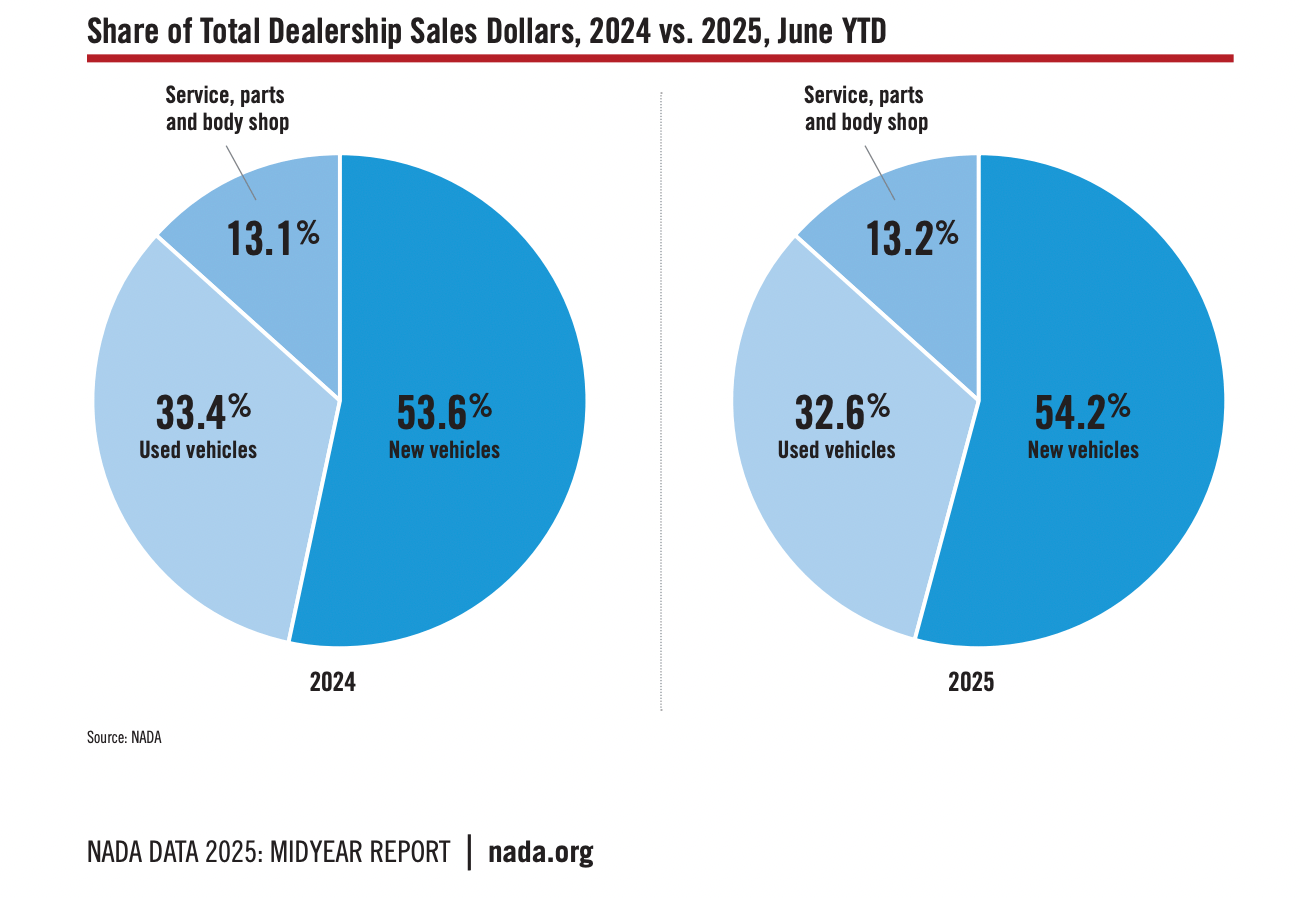
For independent operators, BHPH dealers, and used car showrooms, this translates into a simple operational reality: large volumes of high-value inventory moving quickly through environments that are often open, distributed, and difficult to monitor in real time.
At the same time, the structure of the industry itself adds pressure. The U.S. dealership network includes nearly 17,000 franchised locations, with thousands more independent and used car dealerships operating outside that count. Growth, consolidation, and multi-lot operations are becoming more common even among smaller dealer groups. As inventory spreads across locations, the ability to maintain consistent oversight becomes more difficult and the margin for error narrows.
The dealerships that are winning aren't the ones with bigger fences. They're the ones that have reframed the entire security conversation, from reactive cost to measurable strategy. Here's what the data says, and how forward-thinking dealers are responding.
Rising Loss Risks Across Dealer Groups
The numbers tell a stark story. Auto lending fraud reached $9.2 billion in 2024, up 16.5% from the prior year. At the same time, vehicle theft has evolved beyond opportunistic crime into a more structured and organized activity.
Modern theft is no longer just about breaking into a lot. It is increasingly driven by:
- Digital key programming tools that can bypass vehicle security systems
- Organized groups that scout dealer lots and monitor routines
- Coordinated operations capable of moving inventory across state lines within hours
These methods allow vehicles to be taken, staged, and moved with minimal detection, often before a dealer even realizes a unit is missing.
For BHPH operators, the risk extends further. Every unit on the lot is tied to a payment stream. When a vehicle cannot be located quickly after default, the financial impact compounds:
- Lost principal
- Delayed or lost interest revenue
- Increased charge-offs
- Recovery and repossession costs
What begins as a missing vehicle can quickly become a material financial hit—especially when multiplied across even a small portfolio.
From Cost Center to Profit Driver: The New Security Mindset
For most dealerships, security has historically been treated as a reactive expense. Cameras get installed after an incident, fencing is reinforced after a break-in, and policies are updated after a loss. But that approach is changing.
According to industry reporting from Automotive News, leading dealer groups are shifting toward more integrated, proactive loss prevention strategies, ones that treat security as part of the business model rather than a separate cost center.
This shift is especially relevant for BHPH and used car dealerships because security is directly tied to financial performance. A vehicle that cannot be accounted for is not just a security issue—it is a disruption to revenue, lending, and inventory turnover.
In this new model, security is evaluated on its ability to:
- Protect capital tied up in inventory
- Reduce time to recovery in the event of loss
- Improve operational efficiency across lots
- Support better financing and insurance outcomes
When a single GPS tracker on a $45,000 SUV enables same-day recovery after a theft, the ROI calculation isn't complicated. The security investment doesn't just protect assets , it prevents the revenue loss that happens when that vehicle is off the lot, uninsured for its full value, and unavailable for sale.
Multi-Lot Operations and the Visibility Gap
As dealerships grow, even modestly, the complexity of managing inventory increases. A single used car showroom can typically maintain control through proximity and routine checks. But once inventory is distributed across multiple locations, storage areas, or service yards, visibility begins to break down.
This challenge is amplified by the structure of the industry itself. With nearly 17,000 franchised dealerships operating across the United States (National Automobile Dealers Association), multi-location operations have become increasingly common, even among smaller groups.
The issue is not just scale, it’s distance.
Industry reporting notes that as dealer groups expand, management becomes “more removed” from day-to-day activity. That distance creates a gap between what is recorded in systems and what is actually happening on the ground.
For BHPH dealers, that gap introduces real risk. A vehicle that is not properly tracked between lots, or a unit that is moved without documentation, can easily fall out of alignment with the system of record. Over time, these small inconsistencies create larger discrepancies—especially during audits, reconciliations, or repossession efforts.
Why Traditional Security Measures Fall Short
Traditional dealership security systems still play an important role, but they were built for a different era of risk.
As outlined in Automotive News, standard security measures typically include perimeter fencing, camera systems, and lighting. These elements provide deterrence and documentation, but they are fundamentally reactive.
They answer the question of what happened—but not where a vehicle is right now.
In today’s environment, that limitation matters. Organized theft operations are faster and more coordinated, and internal risks—such as unauthorized use or mismanagement of inventory—are harder to detect with passive systems.
For smaller dealerships in particular, the challenge is compounded by staffing and operational constraints. Monitoring cameras in real time, maintaining logs, and reconciling discrepancies manually is often impractical.
As a result, many dealers are left with partial visibility at best—and gaps in control at worst.
For smaller and mid-sized dealerships, the path forward is not about adding more perimeter protection. It is about gaining control over what already exists.
Because in an industry defined by movement, margin, and risk, the dealerships that win are not the ones that build higher fences.
They are the ones that know exactly where every vehicle is, at all times.
How GPS Tracking Turns Security Into Measurable ROI
GPS fleet tracking solves the visibility problem at every level of dealer operations — for the single-location used car showroom and for the multi-rooftop dealer group alike. The return on investment is measurable, trackable, and in most cases significant enough to justify the entire security budget.
Theft Recovery - From Days to Minutes
Vehicles equipped with GPS tracking, especially those with kill switches (Like Trackhawk GPS) are dramatically more likely to be recovered after theft. Real-time location data enables coordination with law enforcement while the vehicle is still in motion, and recovery teams have located stolen vehicles on the same day, often within hours of the incident. Every recovery is a direct offset against the $9,000 average loss per stolen unit.
Geofencing Alerts - Prevention Before Loss
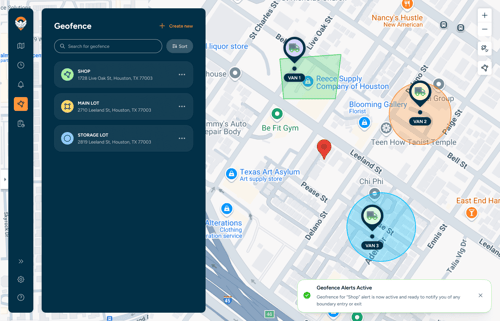
Geofencing technology sends an immediate alert the moment a vehicle moves outside a defined boundary whether that's the lot perimeter after closing hours or a test drive zone boundary. This turns GPS from a recovery tool into a prevention tool. Staff are notified instantly, and in many systems, a remote starter disable can be triggered before the vehicle gets far.
Demo and Loaner Monitoring - Eliminating Internal Exposure
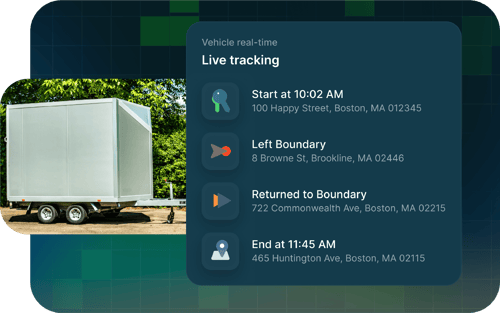
GPS tracking provides irrefutable route history for every demo drive and loaner vehicle. Disputes over mileage, damage, or unauthorized usage get resolved quickly — with data, not debate. Managers can monitor speed, location, and duration in real time, creating accountability without requiring physical oversight.
Inventory Visibility Across Multiple Locations
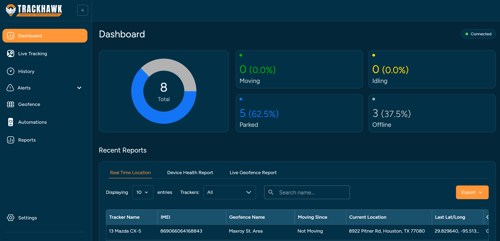
For dealer groups managing inventory across multiple lots, a unified GPS dashboard gives managers real-time visibility into the exact location of every vehicle, across all locations, from a single interface. Reconciliation becomes instant. Inventory transfers are documented automatically. Flooring audits take minutes instead of days.
Repo Efficiency - Protecting the Financing Side
For BHPH and in-house financing operations, GPS tracking directly reduces charge-off losses. When a payment defaults, the vehicle can be located immediately reducing repossession costs and recovery time while giving dealers the documentation needed for regulatory compliance.
Insurance Premium Reduction
Some insurers offer direct discounts for GPS-equipped dealership inventory. Even where formal discounts aren't offered, demonstrating active monitoring infrastructure improves the dealership's loss control profile which matters significantly during renewals as commercial auto premiums continue to rise.
What Leading Dealerships Are Doing Differently
The dealerships pulling ahead on loss prevention in 2026 share a few common operating principles that distinguish them from the average dealer still relying on cameras and reactive protocols.
They treat every vehicle as a tracked asset from the moment it hits the lot.
Rather than adding GPS trackers selectively to high-value units, top dealers equip every vehicle from day one. Full-lot visibility eliminates the manual reconciliation burden and ensures that any unauthorized movement on any vehicle triggers an immediate alert.
They've standardized protocols across all locations.
Multi-location dealer groups that struggle with security do so because each location runs its own playbook. Leading groups create unified loss prevention standards — including GPS systems, key management, after-hours protocols, and reporting requirements — that apply consistently across every rooftop.
They use security data to improve operations, not just prevent theft.
GPS data tells you more than where a stolen vehicle went. It tells you which vehicles sit on the lot the longest, which demo routes are consistently over-mileage, how quickly vehicles are moved from receiving to the sales floor, and whether your lot layout is creating movement inefficiencies. Forward-thinking dealers mine this data for operational improvements that directly accelerate inventory turns.
They connect security investment to F&I revenue.
GPS tracking products aren't just internal tools , they're F&I products. Dealers who offer GPS-based theft recovery products at the point of sale create an additional per-vehicle revenue line while extending protection beyond the lot. The security infrastructure that protects dealer inventory becomes a revenue stream on every sold unit.
The Bottom Line for Auto Dealerships in 2026
The U.S. auto dealer industry sits at the center of an enormous amount of high-value, high-exposure inventory. As vehicle prices remain elevated and organized theft continues to evolve, the dealerships that frame security as a strategic operational function rather than a reactive expense, will protect more of their inventory, lower their insurance costs, and build more efficient multi-location operations.
GPS fleet tracking is the connective tissue between all of it. It's what makes theft prevention proactive, demo monitoring enforceable, repo recovery fast, and inventory reconciliation real-time.
For any car showroom managing real assets in a real world, it's no longer optional infrastructure, it's the foundation of a secure, scalable operation.
Sources: National Insurance Crime Bureau (NICB) | Automotive News | Statista — Auto Dealers in the U.S. | Digital Dealer | Insurance Information Institute