
What Is Fleet Management? A Complete Guide for Modern Businesses
Fleet management is the process of overseeing a company's vehicles, drivers, equipment, and transportation operations. Whether a business operates 10 vehicles or 10,000, effective fleet management helps reduce costs, improve efficiency, increase safety, and deliver better service to customers.
Modern fleet management goes far beyond simply tracking vehicles on a map. Today's organizations use GPS tracking, telematics, route optimization, maintenance scheduling, driver safety monitoring, and data analytics to gain complete visibility into their operations.
Businesses across industries rely on fleet management to keep operations running smoothly. Common examples include:
- Construction companies
- Delivery services
- Transportation and logistics providers
- Utility companies
- Government agencies
- Rental car businesses
- Field service organizations
- Equipment rental companies
As fuel costs continue to rise and customer expectations increase, fleet management has become an essential part of running a successful business.
Table of Contents
- What Is Fleet Management?
- Why Fleet Management Matters
- How Fleet Management Works
- GPS Fleet Tracking and Telematics
- Fleet Maintenance Management
- Driver Safety Monitoring
- Fuel Management and Cost Control
- Route Optimization and Dispatching
- Preventing Vehicle Theft and Unauthorized Use
- Benefits of Fleet Management
- Key Fleet Management Metrics
- Fleet Management by Industry
- Emerging Fleet Management Technology Trends
- Choosing Fleet Management Software
- Frequently Asked Questions
Why Fleet Management Matters
Vehicles are often among the most valuable assets a company owns. They are also one of the largest operating expenses.
Without proper oversight, businesses frequently experience:
- Excessive fuel costs
- Increased maintenance expenses
- Vehicle downtime
- Poor route planning
- Driver safety issues
- Unauthorized vehicle use
- Lower productivity
- Reduced customer satisfaction
Fleet management helps solve these challenges by providing real-time visibility into vehicles, drivers, and assets.
A fleet manager can quickly determine:
- Where vehicles are located
- Which vehicles are active
- Which drivers are speeding
- Which vehicles need maintenance
- Which assets are underutilized
- Whether vehicles are operating outside approved hours
This visibility helps businesses make proactive decisions and improve overall efficiency.
How Fleet Management Works
Fleet management combines software, GPS tracking devices, telematics technology, and operational processes to manage vehicles more effectively.
Most modern fleet operations rely on fleet management software that collects information from:
- GPS tracking devices
- Vehicle diagnostics systems
- Mobile applications
- Dash cameras
- Fuel monitoring tools
- Maintenance records
This information is displayed through a centralized dashboard where managers can monitor fleet activity in real time.
Instead of relying on spreadsheets and manual processes, organizations gain access to actionable data that helps improve decision-making.
GPS Fleet Tracking and Telematics
GPS tracking is one of the most important components of modern fleet management.
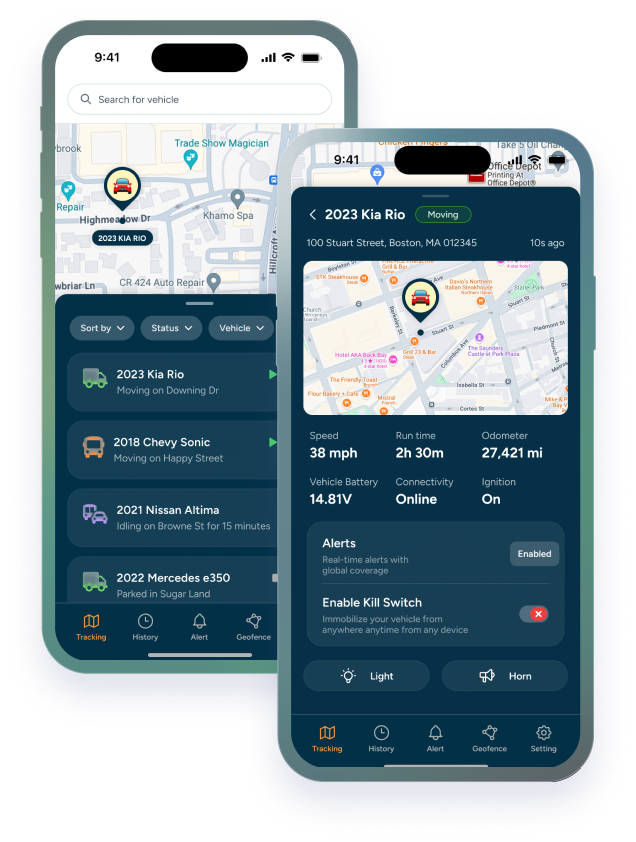
GPS fleet tracking allows businesses to monitor vehicle locations in real time. Fleet managers can see where vehicles are located, review route history, and improve dispatching decisions.
Today's systems go beyond location tracking through telematics technology.
Telematics combines GPS tracking with vehicle diagnostic data to provide deeper operational insights.
Common telematics data includes:
- Vehicle speed
- Engine status
- Fuel consumption
- Idle time
- Mileage
- Engine hours
- Battery voltage
- Driver behavior
This information helps organizations identify inefficiencies and improve performance.
For example, if a vehicle spends multiple hours idling every day, managers can identify the issue and implement corrective action to reduce fuel waste.
Benefits of GPS Fleet Tracking
Organizations that implement GPS tracking often experience:
- Improved fleet visibility
- Better dispatching
- Reduced fuel consumption
- Increased driver accountability
- Faster customer response times
- Improved vehicle security
- More accurate reporting
Real-time visibility gives managers the information they need to make informed operational decisions.
Fleet Maintenance Management
Unexpected vehicle breakdowns are expensive.
A single breakdown can result in:
- Lost revenue
- Delayed service
- Emergency repair costs
- Reduced productivity
- Customer dissatisfaction
Preventative maintenance helps businesses avoid these problems.
Fleet management software allows organizations to automate maintenance schedules based on:
- Mileage
- Engine hours
- Time intervals
- Manufacturer recommendations
Instead of reacting to breakdowns, companies can proactively service vehicles before major problems occur.
Preventative vs Reactive Maintenance
Reactive maintenance occurs when a vehicle is repaired after a failure.
Preventative maintenance focuses on servicing vehicles before failures occur.
Examples include:
- Oil changes
- Tire rotations
- Brake inspections
- Battery testing
- Fluid replacement
Preventative maintenance reduces downtime and extends vehicle lifespan.
Driver Safety Monitoring
Drivers have a significant impact on fleet performance.
Unsafe driving behaviors increase:
- Fuel costs
- Insurance premiums
- Vehicle wear and tear
- Accident risk
- Liability exposure
Modern fleet management systems use telematics and AI-powered tools to monitor driver behavior.
Common safety metrics include:
- Speeding
- Harsh braking
- Aggressive acceleration
- Excessive idling
- Seatbelt compliance
- Distracted driving
Managers can use this information to coach drivers and improve overall fleet safety.
Benefits of Driver Safety Programs
Organizations that prioritize driver safety often experience:
- Fewer accidents
- Lower insurance costs
- Improved fuel efficiency
- Reduced vehicle damage
- Better company reputation
Many companies use driver scorecards to encourage safe driving habits and recognize top-performing employees.
Fuel Management and Cost Control
Fuel is one of the largest expenses for most fleets.
Even small improvements in fuel efficiency can generate significant savings.
Fleet management systems help organizations monitor:
- Fuel consumption
- Idle time
- Driver habits
- Route efficiency
- Fuel card transactions
This information helps businesses identify waste and improve performance.
Common Causes of Fuel Waste
Several factors contribute to excessive fuel consumption:
- Excessive idling
- Aggressive driving
- Poor route planning
- Unauthorized vehicle use
- Improper maintenance
By addressing these issues, organizations can reduce operating expenses and improve profitability.
Route Optimization and Dispatching
Efficient routing is critical for delivery companies, service fleets, and transportation providers.
Route optimization software helps businesses:
- Reduce travel time
- Improve productivity
- Lower fuel costs
- Increase on-time arrivals
- Improve customer satisfaction
Instead of relying on manual planning, managers can use software to identify the most efficient routes based on traffic conditions, service windows, and operational priorities.
This improves both efficiency and customer experience.
Preventing Vehicle Theft and Unauthorized Use
Vehicle theft and unauthorized use remain significant concerns for many fleet operators.
Construction companies, rental car businesses, dealerships, and equipment rental companies are particularly vulnerable.
Modern fleet management systems provide several security tools.
Real-Time GPS Tracking
Managers can locate vehicles instantly and monitor activity around the clock.
Geofence Alerts
Virtual boundaries can generate alerts when vehicles enter or leave designated areas.
After-Hours Notifications
Managers can receive alerts whenever vehicles are used outside approved operating hours.
Stolen Vehicle Recovery
GPS tracking significantly improves vehicle recovery rates.
Remote Immobilization
Certain fleet management systems allow authorized personnel to remotely disable a vehicle when safe and appropriate.
These features help protect valuable assets and reduce risk.
Benefits of Fleet Management
Fleet management provides measurable benefits across an organization.
Lower Operating Costs
Businesses can reduce expenses through:
- Improved fuel efficiency
- Better maintenance practices
- Reduced idle time
- Increased asset utilization
Increased Productivity
Automation reduces administrative work and helps employees focus on higher-value activities.
Better Compliance
Fleet management software helps organizations stay current on inspections, registrations, and maintenance requirements.
Improved Asset Utilization
Organizations gain visibility into how vehicles and equipment are being used.
Better Customer Service
Accurate ETAs and faster response times improve customer satisfaction.
Key Fleet Management Metrics Every Business Should Track
Successful fleet management relies on data.
The following KPIs help organizations measure performance and identify opportunities for improvement.
Vehicle Utilization
Measures how often vehicles are used compared to how often they are available.
Cost Per Mile
Tracks the total cost of operating a vehicle, including fuel, maintenance, insurance, and depreciation.
Fuel Efficiency
Measures how effectively vehicles consume fuel.
Idle Time
Tracks how long vehicles operate without moving.
Maintenance Compliance
Measures whether vehicles receive scheduled maintenance on time.
Driver Safety Scores
Evaluates driver performance based on speeding, harsh braking, and other behaviors.
Monitoring these metrics helps businesses make informed operational decisions.
Fleet Management by Industry
Different industries have unique fleet management requirements.
Construction Fleets
Construction companies often track:
- Heavy equipment
- Engine hours
- Asset utilization
- Jobsite productivity
- Maintenance schedules
Rental Car Fleets
Rental operators focus on:
- Vehicle recovery
- Theft prevention
- Unauthorized use
- Vehicle health monitoring
Delivery Fleets
Delivery organizations prioritize:
- Route optimization
- On-time delivery
- Driver performance
- Customer satisfaction
Service Fleets
Field service businesses benefit from:
- Technician dispatching
- Route planning
- Real-time visibility
- Service response tracking
Emerging Fleet Management Technology Trends
Technology continues to reshape fleet operations.
Artificial Intelligence
AI helps organizations analyze large amounts of operational data and identify trends faster.
Predictive Maintenance
Predictive maintenance uses vehicle data to identify potential failures before they occur.
AI Dash Cameras
Video telematics systems can detect:
- Distracted driving
- Cell phone use
- Tailgating
- Driver fatigue
Electric Vehicle Fleet Management
Modern platforms provide tools to monitor:
- Battery health
- Charging activity
- Energy consumption
- Vehicle range
Internet of Things (IoT)
Connected sensors provide additional visibility into vehicle performance, trailers, equipment, and cargo.
Choosing Fleet Management Software
Not all fleet management platforms are the same.
When evaluating software, organizations should consider:
- GPS tracking capabilities
- Reporting and analytics
- Maintenance management tools
- Driver safety features
- Mobile access
- Integration options
- Customer support
- Scalability
The right solution should support both current operations and future growth.
Frequently Asked Questions
What is fleet management?
Fleet management is the process of managing vehicles, drivers, maintenance, fuel usage, and fleet operations to improve efficiency and reduce costs.
What does a fleet manager do?
A fleet manager oversees vehicle operations, maintenance schedules, driver safety programs, fuel management, and overall fleet performance.
How does GPS tracking improve fleet management?
GPS tracking provides real-time visibility into vehicle locations, route history, driver activity, and fleet performance.
How can fleet management reduce fuel costs?
Fleet management reduces fuel costs by identifying excessive idling, inefficient routes, unsafe driving habits, and unauthorized vehicle usage.
What industries use fleet management software?
Industries including construction, logistics, delivery, rental vehicles, government agencies, utilities, and field service organizations commonly use fleet management software.
Conclusion
Fleet management is far more than simply tracking vehicles on a map. Modern fleet management combines GPS tracking, telematics, maintenance management, driver safety monitoring, route optimization, fuel management, and advanced analytics to improve business performance.
Organizations that invest in effective fleet management practices can reduce costs, improve efficiency, enhance safety, and provide a better customer experience.
As technology continues to evolve, businesses that embrace modern fleet management solutions will be better positioned to increase productivity, protect valuable assets, and maintain a competitive advantage.