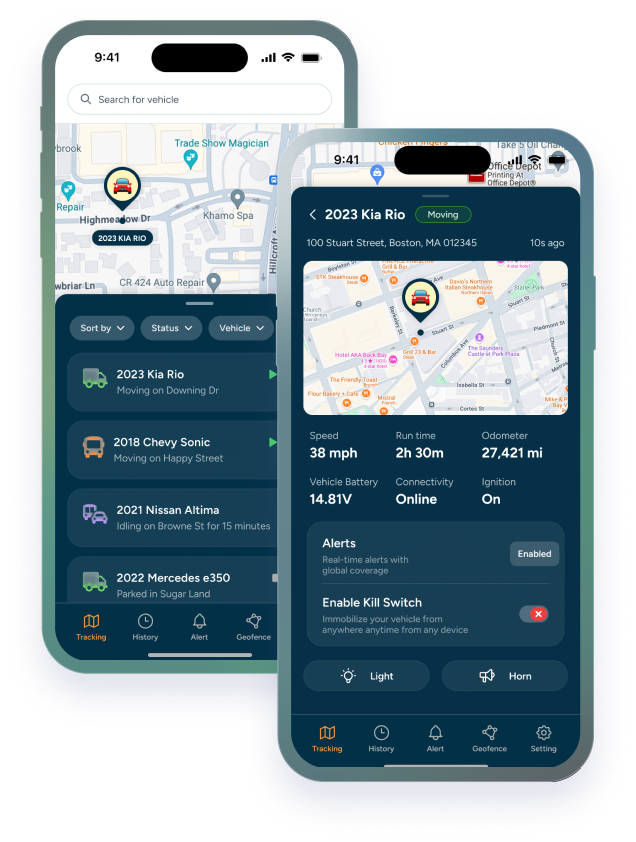

Car trackers are used for vehicle security, fleet management, rental operations, driver accountability, and asset protection. Whether the tracker is installed in a personal vehicle, a rental car, a company truck, or a financed unit, it helps provide real-time visibility into location, movement, and vehicle status.
So what happens when you unplug a car tracker?
The answer depends on the type of tracker, how it is installed, whether it has backup power, and whether the tracking system includes tamper alerts or starter-interrupt features. In many cases, unplugging the device can cause loss of tracking, trigger alerts, interrupt reporting, and create security or contract issues.
What Is a Car Tracker and How Does It Work?
A car tracker is a GPS-enabled device that collects vehicle location and status data. That data is transmitted to a software platform or mobile app, where authorized users can view the vehicle’s location, trip history, alerts, and other details.
Trackers can be installed in several ways:
- OBD-II trackers: Plug into the vehicle’s OBD-II port. Trackhawk’s OBD2 GPS Tracker is an example of a plug-and-play device that can support fast installation and vehicle monitoring.
- Hardwired trackers: Wired directly into the vehicle’s electrical system. These are often used by fleets, BHPH dealers, and rental operators because they are more discreet and harder to remove casually.
- Battery-powered trackers: Operate on their own battery and are useful for trailers, equipment, and non-powered assets.
Each tracker type behaves differently when it loses vehicle power.
What Happens When You Unplug a Car Tracker?
Unplugging a car tracker can have several immediate and long-term effects. It may seem like a small action, but for a business or vehicle owner relying on GPS data, it can create visibility gaps and security risk.
1. Loss of Real-Time Tracking Data
The most immediate effect is the loss of real-time location reporting. If the device has no backup battery or alternate power source, it may stop transmitting once unplugged.
For fleet managers, this can disrupt dispatching, route review, driver oversight, and recovery planning. For rental companies or BHPH dealers, it can create a gap at the exact moment visibility matters most.
2. Security Vulnerabilities
A tracker is often part of a larger security system. When it is removed, unplugged, or disabled, the vehicle may be harder to locate if it is stolen or misused.
If the tracker supports geofencing, movement alerts, or security alerts, those features may stop working once the device loses power. If the vehicle disappears during that gap, recovery becomes more difficult.
Trackhawk’s Smart GPS Security Solutions page explains how tracking, alerts, and security features work together to protect vehicles and valuable assets.
3. Tampering Alerts and Notifications
Many modern GPS systems include tamper detection. If the device is unplugged, loses power, or stops reporting unexpectedly, the system may send an alert to the owner, fleet manager, or account administrator.
For a business, this alert can be an early warning sign. It may indicate accidental disconnection, maintenance work, driver confusion, or intentional tampering.
4. Remote Immobilization May Be Affected
Some GPS systems include starter-interrupt functionality. If a tracker is part of a hardwired GPS kill switch system, unplugging or tampering with the device may affect the system’s ability to report location, process commands, or verify status.
A properly installed GPS Kill Switch is designed to be more secure than a simple plug-in device, but no device should be treated as tamper-proof. Installation quality, device placement, alerts, and backup procedures all matter.
5. Potential Contract or Policy Issues
Unplugging a tracker may violate a contract, rental agreement, fleet policy, or financing agreement.
Examples include:
- A rental customer disconnecting a tracker required by the rental agreement
- A fleet driver removing a company tracking device
- A BHPH customer tampering with a device disclosed in the finance contract
- An employee disconnecting a tracker to avoid route or mileage monitoring
The exact consequences depend on the contract, state law, company policy, and circumstances. Businesses should make tracking policies clear and use consistent procedures.
6. Impact on Insurance or Claims
Some insurance programs, vehicle policies, or fleet safety programs may depend on continuous tracking or driving behavior data. If the tracker is unplugged, the business may lose useful evidence after an accident, theft, or dispute.
For example, if a vehicle is stolen after the tracker is removed, the owner may not have location history or movement alerts available. If a crash occurs, the business may lose access to trip data that could help reconstruct what happened.
7. Loss of Driver Behavior Data
For fleets and service businesses, GPS trackers often capture more than location. They may report speeding, harsh braking, harsh acceleration, idling, trip history, mileage, and route patterns.
Unplugging the tracker can interrupt access to that data. That makes it harder to coach drivers, verify jobs, review vehicle use, or identify unsafe patterns.
Can a Tracker Continue to Work After Being Unplugged?
Sometimes. It depends on the tracker.
A few factors matter:
- Internal backup battery: Some trackers continue reporting for a limited time after they lose vehicle power.
- Stored data: Some systems store data temporarily and upload it later when reconnected.
- Hardwired installation: A concealed hardwired tracker may be more difficult to unplug than an OBD device.
- Tamper detection: The system may notify the owner even if tracking eventually stops.
- Device health monitoring: A platform may flag devices that stop reporting or go offline.
This is why businesses often choose hardwired or concealed devices for vehicles where tampering risk is higher.
OBD vs. Hardwired Trackers When Tampering Is a Concern
OBD trackers are easy to install and useful for many situations, but they are also easier to remove because the OBD-II port is accessible. That makes them practical for quick deployment but less ideal for high-risk vehicles.
Hardwired trackers are more involved to install, but they are usually better for:
- Rental vehicles
- BHPH inventory
- Fleet vehicles
- Work trucks
- High-value vehicles
- Vehicles where tampering is a concern
Hardwired devices can be installed more discreetly and can support additional functions such as starter-interrupt control when paired with the right hardware and authorization.
How to Handle a Disconnected Tracker
If you discover that a car tracker has been unplugged, take the issue seriously but do not assume the cause immediately.
- Check your alerts. Review the software platform to see whether a tamper, power-loss, or offline alert was triggered.
- Inspect the vehicle. Determine whether the device was unplugged accidentally, during maintenance, or intentionally.
- Reconnect the tracker if authorized. If it was disconnected by mistake, restore power and confirm that the device reports again.
- Review location history. Check the last known location and last reporting time.
- Update security settings. Consider enabling tamper alerts, geofencing, or device health notifications.
- Escalate if needed. If the device appears intentionally removed from a rental, fleet, or financed vehicle, follow your company policy and contract terms.
How Businesses Can Reduce Unplugging and Tampering Risk
Businesses can reduce tracker tampering with a combination of hardware, policy, and software.
Useful steps include:
- Use hardwired trackers for higher-risk vehicles.
- Install devices professionally and discreetly.
- Enable tamper and power-loss alerts.
- Explain tracking policies clearly during onboarding or contract signing.
- Review device health regularly.
- Train staff on appropriate use and escalation.
- Pair tracking with geofencing and movement alerts.
- Use starter-interrupt features only under authorized, safe, and compliant procedures.
Trackhawk’s GPS platform helps businesses connect tracking, alerts, and security workflows so teams can respond quickly when a device goes offline or a vehicle behaves unexpectedly.
What to Look for If Unplugging Is a Known Problem
If your organization has already dealt with unplugged trackers, the next system should be chosen with tampering in mind.
Look for:
- Power-loss alerts
- Device health monitoring
- Backup battery support where appropriate
- Hardwired installation options
- Tamper alerts
- User permissions
- Clear reporting inside the dashboard
- Installation support for consistent placement
- Starter-interrupt options for higher-risk vehicles
The best solution depends on the vehicle type and risk level. A plug-in OBD tracker may work well for simple visibility. A hardwired tracker may be better for rental vehicles, BHPH inventory, and business fleets where removal risk is higher. A GPS kill switch may be appropriate when tracking needs to be paired with authorized starter-interrupt control.
Conclusion
Unplugging a car tracker can cause more than a temporary data gap. It can interrupt real-time tracking, weaken security, trigger tamper alerts, affect contracts, and create problems for fleet operations, rental companies, BHPH dealers, and vehicle owners.
The best defense is a system designed for the real risk level of the vehicle. For lower-risk use, an OBD tracker may be enough. For business vehicles, financed inventory, rental fleets, and security-sensitive assets, hardwired GPS tracking with alerts and starter-interrupt options may be the smarter path.
If unplugging or tampering is a serious concern, Trackhawk GPS can help you choose the right tracker type and security setup for your vehicles.