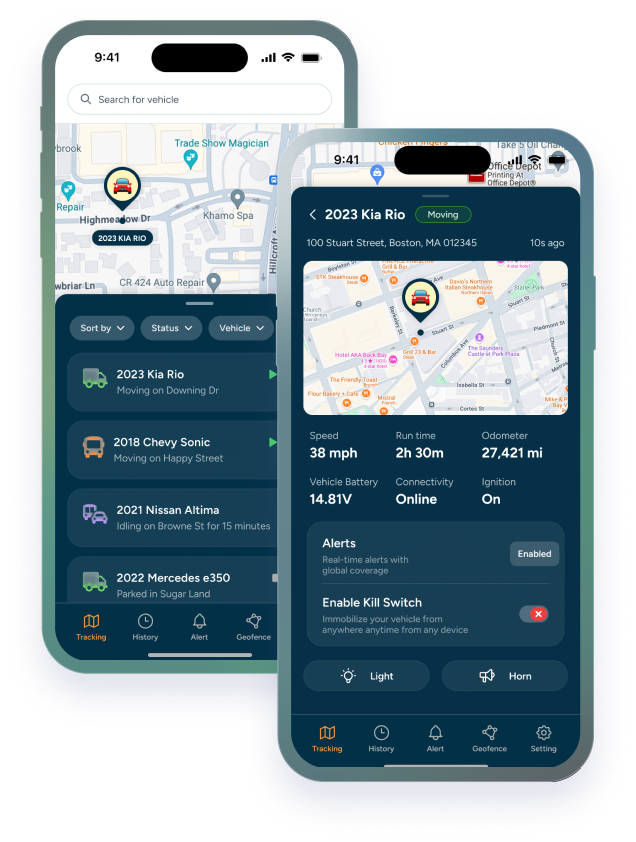

The rental car industry depends on visibility. When vehicles are moving between customers, branches, parking lots, airports, service centers, and long-term rental locations, operators need more than a spreadsheet to know where each unit is and what condition it is in. GPS tracking gives rental businesses the visibility they need to protect cars, reduce losses, improve turnaround, and respond faster when a vehicle is overdue, misused, or stolen.
For rental operators, tracking is not only about finding a car after something goes wrong. It is about building a smarter fleet process that helps prevent problems in the first place. The right system can show real-time vehicle location, send geofence alerts, track mileage, monitor behavior, support maintenance, and help your team make better decisions every day.
If your business depends on rental vehicle uptime, Trackhawk’s Rental Vehicle GPS Tracking solution is designed to help you track, protect, and manage rental cars from one platform.
Why Tracking Rental Cars Matters
Before choosing a tracking method, it helps to understand why tracking matters. A rental vehicle is a high-value asset that leaves your direct control every time it is rented. Most customers follow the agreement, but even one stolen, overdue, damaged, or misused vehicle can create a costly chain reaction.
1. Preventing Theft
Rental cars can be prime targets for thieves because they are valuable, mobile, and often easy to move quickly. GPS tracking can help rental companies detect unusual movement, identify last known location, and assist recovery efforts when a vehicle is stolen or not returned.
A tracking device does not make a vehicle theft-proof. But it can shorten the time between “something is wrong” and “we know where the vehicle is.” That time matters when recovery, customer service, and insurance documentation are involved.
2. Monitoring Vehicle Usage
Rental agreements often define how vehicles can be used. They may include mileage limits, geographic restrictions, approved drivers, return dates, or prohibited uses. GPS tracking helps operators monitor whether a vehicle is being used in a way that aligns with the agreement.
Useful data can include:
- Mileage
- Trip history
- Vehicle location
- Speed events
- Entry or exit from geofenced zones
- Ignition or movement activity
- After-hours use
- Long idle periods
This helps your team identify exceptions without manually checking every car.
3. Optimizing Fleet Management
Rental fleet management depends on knowing which vehicles are available, which are on rent, which need service, and which are in the wrong place. GPS tracking helps operators reduce downtime by connecting vehicle location with operational status.
A tracking system can help:
- Locate available vehicles faster
- Confirm returns to the lot
- Schedule maintenance based on mileage
- Reduce time spent searching for units
- Improve branch-to-branch fleet balancing
- Monitor vehicles in storage or overflow lots
- Plan pickups and deliveries more efficiently
4. Enhancing Customer Service
Tracking can also support customers. If a renter breaks down, gets lost, or needs roadside support, location visibility can help your team respond faster. If there is a billing dispute about mileage, return time, or vehicle location, trip history can provide documentation.
Good tracking should make customer service smoother, not more invasive. That is why policies, disclosure, and appropriate access controls matter.
How GPS Technology Works for Rental Car Tracking
Most rental car tracking systems rely on a GPS device installed in the vehicle. The device receives location data from satellites and transmits that information to a cloud-based dashboard or mobile app. Fleet managers can then view location, routes, alerts, and reports.
The typical process looks like this:
- Device installation: A GPS device is installed in the vehicle, often under the dashboard, in the OBD-II port, or hardwired in a concealed location.
- Location reporting: The device communicates with satellites and cellular networks to report location data.
- Software access: Authorized users view the vehicle in a web or mobile platform.
- Alerts and reports: The system sends alerts for geofences, speed, movement, tampering, overdue vehicles, or other events.
- Action: The rental team uses that information to contact the customer, dispatch support, schedule service, or begin recovery steps.
Trackhawk’s GPS Fleet Tracking Software brings those pieces together with tracking, geofencing, alerts, reports, and mobile access for businesses that manage vehicles every day.
Best Methods to Track Rental Cars
There are several ways to track rental cars. The right choice depends on your fleet size, vehicle type, risk level, budget, and how much control you need.
1. GPS Tracking Systems
GPS tracking systems are the most reliable option for rental operators who need vehicle visibility at scale. A dedicated GPS tracker can provide real-time location, trip history, alerts, and reporting.
Features to look for include:
- Real-time tracking: See where vehicles are without waiting for manual updates.
- Geofencing: Create virtual boundaries around lots, service regions, state lines, or customer zones.
- Driver behavior monitoring: Track speeding, harsh braking, rapid acceleration, and other risky behavior.
- Mileage tracking: Support maintenance and rental agreement monitoring.
- Tamper alerts: Know when a device is unplugged or stops reporting.
- Maintenance alerts: Trigger service reminders based on mileage, time, or usage.
- Dashboard access: Give your team a clear view of vehicles across the fleet.
2. Mobile Apps for Rental Car Tracking
A GPS system is much more useful when your team can access it from anywhere. Mobile apps allow managers, dispatchers, and authorized staff to view vehicles, receive alerts, and respond quickly.
A good rental tracking app should include:
- Live map view
- Vehicle search
- Push notifications
- Geofence alerts
- Trip history
- Vehicle status
- User permissions
- Mobile-friendly reports
This is especially helpful for small rental teams where one person may handle customer service, vehicle dispatch, and recovery issues in the same day.
3. Hardwired Trackers
Hardwired GPS trackers are often a better fit for rental businesses because they are more difficult to remove than plug-in devices. They can also support additional functions, depending on the hardware.
Hardwired trackers are useful for:
- High-value vehicles
- Long-term rentals
- Vehicles at higher risk of theft
- Rental companies with repeat misuse issues
- Fleets that want hidden installations
- Vehicles that may need starter-interrupt support
If security is a priority, a hardwired GPS tracker with alerts and professional installation may be the better long-term choice.
4. OBD-II Trackers
OBD-II trackers are fast to install because they plug into the OBD-II port. They can work well for quick deployment, small fleets, or lower-risk vehicles. The tradeoff is that they are easier to find and unplug.
OBD devices can still be valuable when you need:
- Fast setup
- Basic tracking
- Vehicle diagnostics
- Mileage data
- Short-term visibility
- Lower installation complexity
For high-risk rental use, operators may prefer hardwired devices because they are less obvious and more secure.
5. GPS Kill Switch Trackers
Some rental operators need tracking plus controlled starter-interrupt capability. A GPS kill switch tracker can help authorized users prevent a vehicle from being restarted under specific conditions.
This can matter when a vehicle is stolen, overdue, or being used in a way that creates serious risk. The key is responsible use. Starter interrupt should be tied to clear policies, contract language, user permissions, and safety procedures.
Trackhawk’s GPS Kill Switch can support rental operators that need tracking, alerts, and starter-interrupt functionality in one system.
How to Choose the Right Tracking Solution
Not every rental business needs the same tracking setup. A small local rental company with 12 vehicles may need something different from a multi-location operator with hundreds of cars.
Consider these factors before choosing a system.
Fleet Size and Complexity
Larger fleets usually need stronger dashboards, bulk management tools, alerts, and reports. Smaller fleets may prioritize simple setup and mobile visibility.
Ask:
- How many vehicles need tracking?
- How many users need dashboard access?
- Do you manage multiple lots or branches?
- Do you rent short-term, long-term, or both?
- Are vehicles picked up and dropped off outside business hours?
Risk Level
High-risk vehicles may need more than basic tracking. If you have problems with theft, late returns, unauthorized travel, or tampering, look for a system with geofencing, tamper alerts, hardwired hardware, and recovery support.
Integration Needs
If you already use rental management software, fleet software, or maintenance tools, ask whether the GPS platform can export data or integrate with your process. Even without full integration, clean reporting can save time.
Customer Experience
Tracking should not create confusion for renters. Your agreement, policies, and staff communication should explain how GPS is used. The technology should support better service, faster assistance, and clearer billing.
Budget
The cheapest tracker is not always the lowest-cost option. A weak setup that is easy to remove, hard to monitor, or slow to alert your team can cost more in losses and downtime.
Compliance and Privacy Considerations
Rental companies should treat GPS tracking as a serious data and policy issue. Rules vary by location, and customers should understand what is being monitored. This is not legal advice, but a responsible policy should cover:
- Disclosure in rental agreements
- Legitimate reasons for accessing location data
- Data retention rules
- Staff permissions
- Customer consent where required
- How GPS data is used in disputes
- How tracking is handled for overdue or stolen vehicles
Do not use GPS data casually. Use it for security, recovery, contract compliance, customer support, and fleet operations.
Conclusion
Tracking rental cars is essential for protecting assets, preventing theft, enforcing agreements, and running a more efficient rental operation. GPS tracking systems, mobile apps, hardwired devices, OBD trackers, and GPS kill switch options all have a place depending on your fleet and risk level.
The best system gives your team real-time visibility without creating more work. It helps you see where vehicles are, respond to issues faster, reduce downtime, and make better operational decisions.
If your rental business needs smarter tracking, geofencing, alerts, and vehicle protection, Trackhawk GPS can help you choose the right setup for your fleet.