
Mixed fleets are common in growing businesses. One company may operate cars for sales, trucks for service, trailers for transport, and equipment that moves between jobsites.
The challenge is that each asset type creates a different kind of visibility problem. A truck has a driver and a daily route. A trailer may sit unattended. Equipment may move from one site to another without the same check-in process as a vehicle.
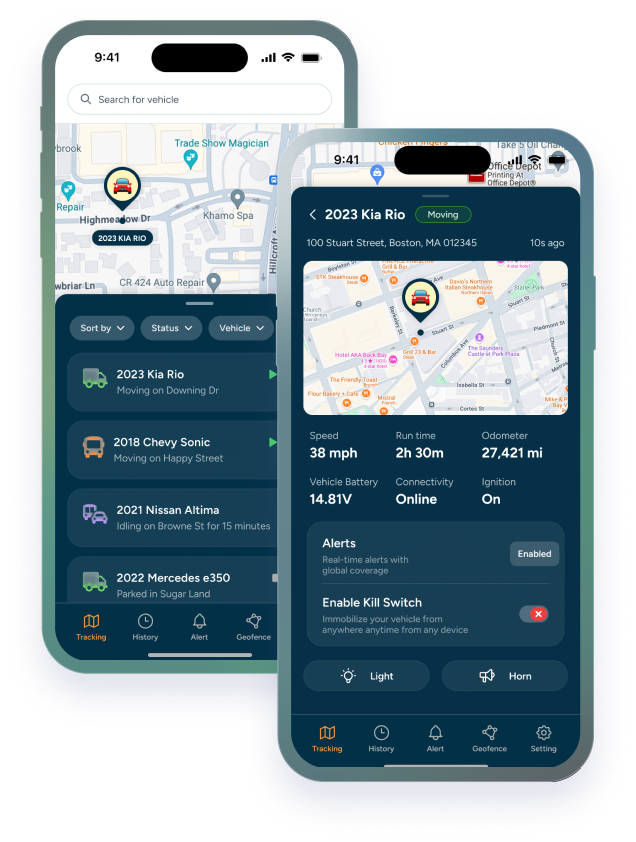
GPS tracking for mixed fleets helps businesses bring cars, trucks, trailers, equipment, and other assets into a clearer operating picture. Instead of managing every asset type in a separate mental bucket, owners and managers can use location, alerts, route history, and asset activity to understand what is happening across the operation.
This article is for business owners, fleet managers, operations teams, construction companies, service providers, delivery operators, and asset-heavy businesses that need better visibility across more than one type of vehicle or asset.
TL;DR / Key Takeaways
- Mixed fleets often include cars, trucks, trailers, equipment, and other assets managed by the same business.
- GPS tracking helps businesses organize visibility across assets that move, sit, idle, or change locations in different ways.
- Trailers and equipment may need different tracking considerations than powered vehicles.
- The best mixed-fleet tracking setup starts with the highest-risk assets and builds a simple workflow around alerts, permissions, and review.
What Counts as a Mixed Fleet?
A mixed fleet is any group of business vehicles and assets that do not all operate the same way. That may include company cars, service vans, pickup trucks, box trucks, trailers, generators, construction equipment, rental assets, or other valuable items that move in and out of daily operations.
The key issue is not how many assets you own. It is how many different asset behaviors your team has to manage.
A company with five trucks and ten trailers may have a mixed-fleet problem. So can a construction business with a few vehicles, several machines, and equipment that rotates between jobsites. Trackhawk’s business GPS tracking plans are built around that practical reality: businesses need smart GPS solutions that help them see valuable assets clearly without making the system harder than the work itself.
Why Mixed Fleets Are Harder to Manage Than Standard Vehicle Fleets
A standard vehicle fleet is usually easier to think about. Vehicles have drivers, routes, schedules, mileage, and a familiar operating pattern. Mixed fleets are different because every asset does not move on the same timeline.
A truck may be used every day. A trailer may sit at a customer site for a week. A piece of equipment may move between yards, jobsites, and storage areas with no fixed route. When those assets are tracked the same way, managers can end up with too much noise in one area and not enough information in another.
That is where mixed fleet tracking becomes less about dots on a map and more about context. The business needs to know which assets are moving, which assets are sitting, which assets have left approved areas, and which assets need attention.
The goal is not to make every asset behave like a vehicle. The goal is to give each asset the right level of visibility for the role it plays in the business.
The Core Visibility Questions Every Mixed Fleet Should Answer
Before choosing devices or building dashboards, a business should get clear on what it actually needs to know. Mixed fleets become easier to manage when the tracking setup answers practical operating questions.
Start with these:
- Where is each asset right now? Real-time or recent location helps teams find vehicles, trailers, and equipment without repeated calls or manual checks.
- Is the asset where it is supposed to be? Geofencing can help flag movement outside yards, jobsites, customer locations, or service areas.
- Has the asset moved when it should not have? Movement alerts can help identify after-hours activity or unexpected relocation.
- How has the asset been used over time? Route history and activity records can help explain what happened before a problem is noticed.
- Who needs access to the information? Owners, dispatchers, field teams, and operations staff may need different levels of visibility.
These questions keep the setup focused. The point is not to monitor everything for the sake of monitoring. It is to make sure the right person can see the right asset at the right moment.
How Trailers and Equipment Change the Tracking Strategy
Trailers and equipment change the tracking conversation because they are often valuable, mobile, and less directly supervised than cars or trucks. They may not have the same daily driver, route, or ignition pattern as a powered vehicle.
That is why asset type matters. A truck may need route history, driver behavior alerts, and maintenance visibility. A trailer may need movement alerts, geofencing, and a tracker designed for non-powered assets. Equipment may need location history, jobsite visibility, and alerts that help identify when something has moved outside the expected area.
For asset-heavy operations, Trackhawk’s Equipment & Asset Tracking page is a useful next step. Businesses that manage trailers specifically can also review the Trailer GPS Tracker page, while broader equipment questions can be supported by the existing guide on GPS Devices for Equipment Tracking.
Building a Simple Mixed-Fleet Tracking Workflow
Mixed-fleet tracking works best when the workflow is simple enough for the team to use every day. A complicated setup may look impressive, but it can fail if alerts are ignored or nobody knows who should respond.
A practical workflow can look like this:
- Group assets by role: Separate vehicles, trailers, powered equipment, and non-powered assets so each category has the right expectations.
- Set location rules: Define yards, jobsites, customer locations, service areas, and storage zones where assets are expected to be.
- Choose alert types by asset: Vehicles may need route and behavior alerts, while trailers and equipment may need movement and geofence alerts.
- Assign owners: Decide who receives alerts, who checks history, and who follows up when something looks wrong.
- Review exceptions regularly: Repeated movement, missed check-ins, or unusual locations can show where the workflow needs adjustment.
For teams that already manage vehicles in the field, Trackhawk’s article on Mobile Fleet Tracking can also help connect location visibility to day-to-day operations.
How to Decide What to Track First
The best starting point is usually the asset that creates the most risk if it goes missing, moves unexpectedly, or cannot be found quickly. For one business, that may be a trailer. For another, it may be a high-value machine, service truck, or piece of field equipment.
The real answer depends on value, mobility, downtime risk, and how often the asset changes locations. A low-cost item that rarely moves may not need the same attention as a trailer that sits offsite or a machine that multiple crews rely on to complete jobs.
What matters is prioritization. Start with the assets that create the biggest operational headache when visibility breaks down, then build outward from there. That keeps mixed-fleet GPS tracking useful, manageable, and tied to real business risk.
A Smarter Way to Manage Mixed Assets
Mixed fleets do not need to become complicated fleets. With the right GPS tracking setup, businesses can keep cars, trucks, trailers, and equipment visible without treating every asset exactly the same.
Trackhawk GPS gives businesses smart GPS solutions for vehicles, trailers, equipment, and valuable assets, with real-time visibility, alerts, hardware + software included, transparent pricing, and support for teams that need practical control across the operation.
When every asset plays a different role, the smartest tracking strategy is the one that helps your team see what matters and act when something does not look right.
Frequently Asked Questions
What is a mixed fleet?
A mixed fleet is a group of business vehicles and assets that includes more than one asset type, such as cars, trucks, trailers, equipment, and other valuable items managed by the same operation.
How does GPS tracking help mixed fleets?
GPS tracking helps mixed fleets by giving businesses visibility into where vehicles and assets are, when they move, whether they leave approved areas, and which items need attention.
Do trailers and equipment need different GPS tracking than vehicles?
They may. Trailers and equipment often move differently from vehicles and may need movement alerts, geofencing, battery-powered options, or asset-specific tracking features.
What should a business track first in a mixed fleet?
Businesses should usually start with the assets that create the most risk if they are lost, delayed, moved unexpectedly, or difficult to locate.
Can one GPS tracking system manage vehicles and assets together?
Yes, a business GPS tracking system can help teams manage different vehicle and asset types together, as long as the setup accounts for how each asset is used.