
If your fleet operates commercial vehicles in the United States, compliance technology is not something you can afford to overlook. Electronic logging systems play a central role in meeting federal safety requirements, and fleets depend on them every day to stay compliant and avoid costly disruptions.
In January 2026, the Federal Motor Carrier Safety Administration (FMCSA) announced the removal of four Electronic Logging Devices (ELDs) from its official list of registered devices. This development is an important reminder that compliance tools must be actively monitored over time, not simply implemented once and forgotten. So what does this mean, and what should fleet operators do next? Let’s break it down.
First, What Is an ELD?
An Electronic Logging Device, or ELD, is a federally required system that automatically tracks key driving activity for commercial drivers. These devices record information such as driving time, engine hours, vehicle movement, location, and Hours of Service compliance. In simple terms, an ELD functions as a digital logbook that helps fleets comply with U.S. driver safety regulations.
ELDs are most commonly used in trucking fleets and other commercial carriers that operate under FMCSA Hours of Service rules. For many businesses, they have become a standard part of compliance infrastructure.
What Happened in January 2026?
On January 13, 2026, the FMCSA officially removed four devices from its Registered ELD List. The removed products include PREMIERRIDE LOGS, DSGELOGS, STATE ELOGS, and one additional vendor identified in the FMCSA notice. These devices are no longer considered compliant under federal ELD regulations, meaning fleets using them may need to transition quickly to an approved alternative.
This announcement highlights the importance of staying current with regulatory updates, especially when compliance technology is involved.
Why This Matters for Fleets
Using a non-compliant ELD can lead to serious consequences for fleet operators. Carriers may face roadside inspection violations, penalties or citations, vehicles being placed out of service, operational disruptions, and negative impacts on safety scores. For fleet managers, this is a strong reminder that compliance tools must be continuously verified rather than assumed to remain valid indefinitely.
Even if a fleet is not directly affected by this specific removal, the broader message is clear: compliance technology requires ongoing attention.
Who Should Pay Attention?
This update is especially important for fleets that operate trucks across state lines, manage CDL drivers, rely on third-party ELD logging systems, or depend heavily on digital compliance reporting. Fleets that already use an approved ELD should still treat this as a best-practice wake-up call, since device status and regulatory requirements can change over time.
Why Would FMCSA Remove an ELD?
The FMCSA may remove ELDs if they fail to meet technical and certification standards. Devices can be removed due to issues with proper data transfer during inspections, inaccuracies in driving-time logs, missing required reporting functions, or failure to meet compliance certification requirements. This shows that not all compliance technology performs equally over the long term, and fleets must be proactive in ensuring their systems remain approved and reliable.
Can a GPS Tracker Replace an ELD for Hours-of-Service Compliance?
A common question fleet operators ask is whether GPS tracking can serve as a substitute for an ELD. The answer is no. While GPS tracking provides valuable visibility into vehicle location, movement, and data, it does not fulfill the specific federal requirements of the ELD mandate.
ELDs are designed to automatically record regulated Hours of Service data, including driving time, engine hours, and duty status changes, in a format required during inspections or audits. GPS trackers alone do not capture the full set of driver log information that FMCSA compliance requires. For fleets subject to Hours of Service rules, an approved ELD remains mandatory.
Understanding this distinction is especially important when responding to regulatory changes such as the January 2026 ELD removals.
How GPS Tracking Supports Compliance Beyond the ELD Mandate
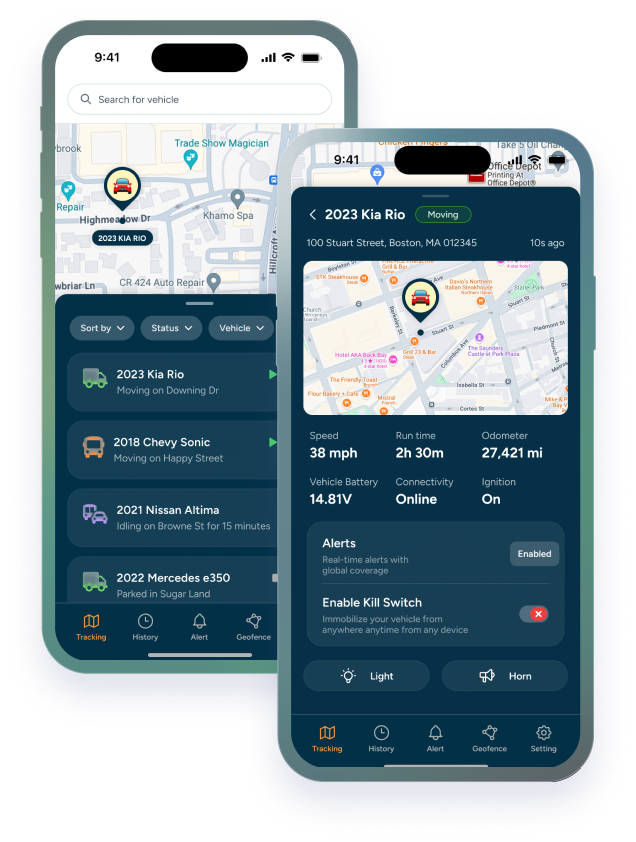
Although GPS tracking cannot replace an ELD, it plays an increasingly valuable role in supporting fleet compliance and operational oversight. While ELDs focus primarily on Hours of Service reporting, GPS tracking provides real-time visibility into vehicle location, routing behavior, movement patterns, and unexpected activity.
This broader awareness helps fleets strengthen accountability, improve safety practices, and respond quickly when vehicles operate outside expected schedules or designated areas. GPS tracking also supports compliance indirectly by helping operators document fleet activity, monitor asset utilization, reduce unauthorized vehicle use, and maintain greater control over daily operations.
When paired with an approved ELD system, GPS tracking becomes part of a connected fleet strategy that helps businesses reduce risk and remain prepared as regulations and enforcement continue to evolve.
What Fleet Operators Should Do Right Now
Fleet managers should begin by verifying the exact ELD provider and device model currently in use. If there is uncertainty, reviewing invoices, vendor documentation, or fleet software dashboards can help confirm the correct system.
Next, operators should check the FMCSA Registered ELD portal, which maintains the official and regularly updated list of approved devices. Fleets should make a habit of reviewing this resource periodically, especially when enforcement updates are released.
Finally, fleets should consider implementing an ongoing compliance technology review process rather than waiting for unexpected regulatory action. Scheduling routine checks of logging systems, safety monitoring tools, vendor support reliability, and connected fleet technology can help prevent disruptions. Compliance is not a one-time setup—it requires continuous oversight.
The Bigger Takeaway: Fleets Need Reliable Visibility Tools
The FMCSA’s January 2026 action reflects a larger trend in the fleet industry. Fleets are increasingly moving toward connected solutions that provide more than basic compliance. Modern fleet technology is expected to support operational visibility, safety accountability, asset tracking, and smarter reporting, all of which contribute to stronger long-term performance.
Final Thoughts
The January 2026 FMCSA ELD removals are a clear reminder that fleet compliance technology can change quickly, and businesses need to stay proactive. The best approach for fleet operators is to remain informed, verify that tools remain approved, and choose reliable long-term technology partners. In a landscape where compliance and operational visibility are becoming more connected, fleets that stay ahead of these changes will be better positioned to avoid disruption and maintain control.