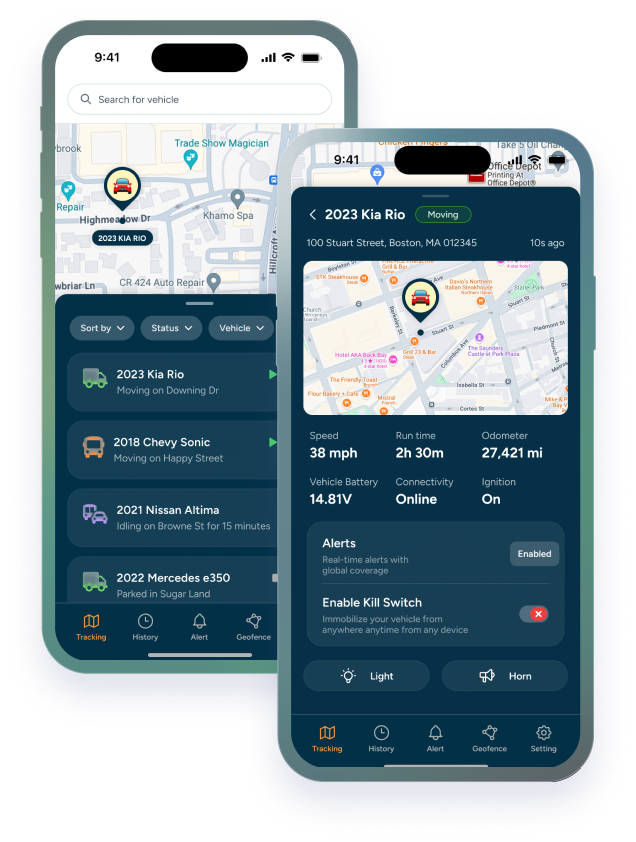

Equipment rental companies send valuable assets into the field every day. Once equipment leaves the yard, the operator needs to know where it is, whether it is moving, when it should return, and what to do if it does not come back as expected.
Basic location checks can help, but rental operations often need more than a one-time answer. They need ongoing visibility across yards, jobsites, customer locations, and recovery workflows.
Equipment rental GPS tracking is the use of GPS devices and software to monitor rental asset location, movement, usage signals, geofences, alerts, and recovery information from a central system.
This article is for rental companies, equipment rental operators, fleet managers, asset managers, and business owners who need better control over rented equipment in the field.
TL;DR / Key Takeaways
- Equipment rental GPS tracking helps rental companies monitor assets after they leave the yard.
- Location visibility, movement history, geofencing, and alerts can help reduce uncertainty around rented equipment.
- Usage signals can help operators understand whether equipment is moving, sitting, or being used outside expected terms.
- Recovery workflows should be planned before equipment becomes overdue, missing, or difficult to locate.
Why Equipment Rental Companies Need More Than Basic Location Checks
Rental equipment moves through a messy lifecycle. It leaves the yard, goes to a customer, moves between jobsites, sits idle, returns late, or sometimes does not return when expected.
A one-time location check may answer where the asset is at a single moment, but it does not explain how it moved, whether it left an approved area, or whether the activity matched the rental agreement.
Trackhawk’s Equipment & Asset Tracking page is built around that kind of asset visibility. For rental companies, the goal is not just tracking equipment. It is keeping an extra set of eyes on valuable assets while they are outside direct control.
Tracking Location Across Yards, Jobsites, and Customer Locations
Rental assets do not always move in a straight line from the yard to one customer site and back. Equipment may be transferred between locations, left at a jobsite, moved by a customer, or stored somewhere different from the original plan.
GPS tracking helps rental companies see that movement more clearly. Location history, geofencing, and alerts can help teams understand where an asset is, where it has been, and whether it is still inside expected operating areas.
That visibility can also support customer communication. If there is a question about where equipment was used or when it moved, the rental company has more than memory or manual notes to work from.
Usage Visibility: Knowing Whether Equipment Is Moving, Sitting, or Being Misused
Location is only one part of the rental picture. Operators may also need to know whether equipment is moving, sitting unused, leaving an approved area, or showing activity that does not match the expected rental use.
GPS data can support those questions by showing movement, stops, location changes, and alert history. That does not replace rental agreements or customer communication, but it gives the business a clearer record of asset activity.
For rental companies that also manage vehicle-style assets, Trackhawk’s Rental Vehicle GPS Tracking page shows how similar visibility principles apply to rental vehicles, overdue returns, and operational control.
Geofencing and Alerts for Rental Equipment
Alerts are useful when they tell the rental company something has changed. The best setup depends on the asset, rental terms, and risk level.
Helpful alert categories can include:
- Yard exit and return alerts: Know when equipment leaves or comes back to the rental location.
- Jobsite geofences: Track whether equipment stays within approved work areas.
- After-hours movement: Flag movement outside expected operating windows.
- Unexpected relocation: Identify assets that move when they were expected to stay put.
- Overdue or recovery-related alerts: Support follow-up when equipment is not returned as expected.
The key is to avoid alert overload. Rental teams need notifications that support action, not noise that gets ignored.
How GPS Tracking Supports Recovery When Equipment Goes Missing
When rented equipment is overdue or missing, the rental company needs a clear starting point. Without GPS data, the team may rely on calls, paperwork, customer updates, and manual searching.
GPS tracking can help support recovery by showing last known location, recent movement, geofence activity, and alert history. That information may help narrow the search and guide the next step in the company’s recovery process.
If stronger control features are being considered for certain assets or vehicle-style rental units, Trackhawk’s GPS Kill Switch page can help businesses review immobilization options. Those features should be used only where appropriate, with clear policies, permissions, and applicable requirements in mind.
Choosing Tracking Priorities for an Equipment Rental Fleet
Rental companies do not have to track every asset the same way. The first step is deciding which assets create the most risk when visibility breaks down.
A practical prioritization process can include:
- Start with high-value equipment: Track the assets that would create the largest loss, downtime, or replacement cost.
- Review movement patterns: Prioritize items that leave the yard often or move between jobsites.
- Look at overdue risk: Focus on assets that are harder to recover when customers do not return them on time.
- Match alerts to rental terms: Use geofences, movement alerts, and history based on how each asset is supposed to be used.
- Assign response ownership: Decide who reviews alerts, who contacts customers, and who documents recovery activity.
For device-level considerations, Trackhawk’s guide on GPS Devices for Equipment Tracking can help rental teams think through how different equipment types may need different tracking approaches.
A Clearer Way to Manage Rental Assets
Equipment rental GPS tracking helps rental companies reduce uncertainty once assets leave the yard. With better visibility into location, movement, alerts, and history, operators can respond faster when equipment is overdue, misplaced, or used outside expectations.
Trackhawk GPS supports rental and asset-heavy businesses with smart GPS solutions, real-time visibility, geofencing, alerts, hardware + software included, transparent pricing, and support for teams managing valuable assets in the field.
When rental equipment is tied to revenue, customer commitments, and asset protection, knowing where it is can help the business stay in control.
Frequently Asked Questions
What is equipment rental GPS tracking?
Equipment rental GPS tracking uses GPS devices and software to help rental companies monitor equipment location, movement, geofences, alerts, and recovery information after assets leave the yard.
Why do rental companies use GPS tracking for equipment?
Rental companies use GPS tracking to reduce uncertainty around where equipment is, whether it has moved, whether it is inside approved areas, and what happened when an asset becomes overdue or difficult to locate.
What alerts are useful for rental equipment?
Useful alerts may include yard exit and return alerts, jobsite geofence alerts, after-hours movement, unexpected relocation, and alerts tied to overdue or recovery workflows.
Can GPS tracking show equipment usage?
GPS tracking can help show movement, stops, location changes, and activity history. It may support usage questions, but it should be interpreted alongside rental terms and business policies.
Does every rental asset need the same GPS tracker?
No. High-value, frequently moved, powered, non-powered, and vehicle-style rental assets may each need different tracking considerations based on risk, power source, and operating pattern.
Can GPS tracking guarantee recovery of missing rental equipment?
No. GPS tracking cannot guarantee recovery, but it can support recovery workflows by providing location visibility, recent movement, geofence activity, and alert history.